
A film studio doesn't wait for opening night to start selling tickets. It sells the wait itself, months out, with a two-minute cut that reveals just enough to make you need the rest. That's the entire job of a movie trailer: turn "this exists" into "I have to see this."
Most product launches skip that step. A new app, a new SaaS feature, a new game update goes out as a screenshot carousel or a feature-list post. No hook, no build, no reason to care before the thing is even live. The trailer format fixes that gap, and it doesn't require hiring a studio anymore. It requires a genre, a one-paragraph story, and a generator that can render the beats.
Why the trailer format works before you have a product to show
A movie trailer isn't advertising a finished experience. It's advertising the anticipation of one, and that anticipation has a measurable payoff. A 2025 study in the Journal of Product Innovation Management (Mandler, Kupfer, Hennig-Thurau, Schauerte, Cziehso) ran a controlled experiment on pre-release consumer buzz using an actual unreleased film (later released as Ford v Ferrari) and found that exposure to visible anticipation from other consumers didn't just reflect existing purchase intent, it created new adoption intent in people who saw it. Their market-level modeling estimated the revenue uplift from that contagion effect at roughly 80% to over 900%, depending on the product category and audience segment, with the biggest gains going to lower-profile products that needed the boost most.
That's the mechanism a trailer format exploits directly. It doesn't ask the viewer to evaluate a finished product. It asks them to feel like they're already late to something everyone else is anticipating.
Google's own case study on this backs it up from the buyer's-attention side, not just the psychology side. When 20th Century Fox UK moved beyond a single 30-second trailer cut for The Greatest Showman and built a sequenced set of video ads around it (an anchor trailer, then follow-up cuts served based on how each viewer engaged with the anchor), the campaign delivered a 149% uplift in consideration and a 157% uplift in organic title searches compared to running the anchor trailer alone. The lesson generalizes past movies: a trailer-shaped hook, followed by more story for people who engage with it, outperforms a single flat ad running once.
Neither of those studies is about software or apps. But the underlying mechanic, visible anticipation plus a structured reveal, works the same way whether the "release" is a film or a product launch. The format is borrowed. The advertiser doesn't have to be.
What a trailer-format ad actually needs
A trailer isn't just "dramatic music over your product." It has a structure, and skipping the structure is what makes a fake-trailer ad look like a parody instead of a hook. The three-act shape that makes a real trailer work:
Act one: the world, established fast. Two or three shots that set the stakes before anyone knows what's being sold. For a product launch this is the problem your audience already lives with, shown as a scene, not stated as a headline.
Act two: the turn. The moment the product enters the story and the stakes shift. This is where a feature reveal becomes a plot beat instead of a slide.
Act three: the drop. Title card, release date or "available now," a line that reads like a tagline instead of a CTA. This is the only place the ad admits it's an ad.
Coinis Ad Studio's trailer tool, generate_trailer_video, is built around exactly that three-beat contract: you supply a genre, a story (the beat-by-beat idea, up to 2,000 characters), and one to three cast members, and it renders candidate cuts and blind-judges them for cinematic quality before handing back the winner. No timeline editor, no voiceover booth, no stock footage license.
Building the brief: genre, story, cast
The genre decides the visual and musical language before a single frame renders. "Thriller" pulls tight framing and a rising score. "Documentary" pulls handheld camera and a narrator's voice. Pick the genre that matches the emotional promise of the launch, not the literal category of the product. A productivity app launch can run as a heist thriller (the problem is the thing standing between you and getting your time back) more effectively than it can run as a straight tech-explainer genre, because the heist frame gives the format something to escalate.
The story field is the part worth spending real time on, because it's the entire creative surface the generator has to work with. A usable trailer story reads like an actual three-act pitch, not a feature list:
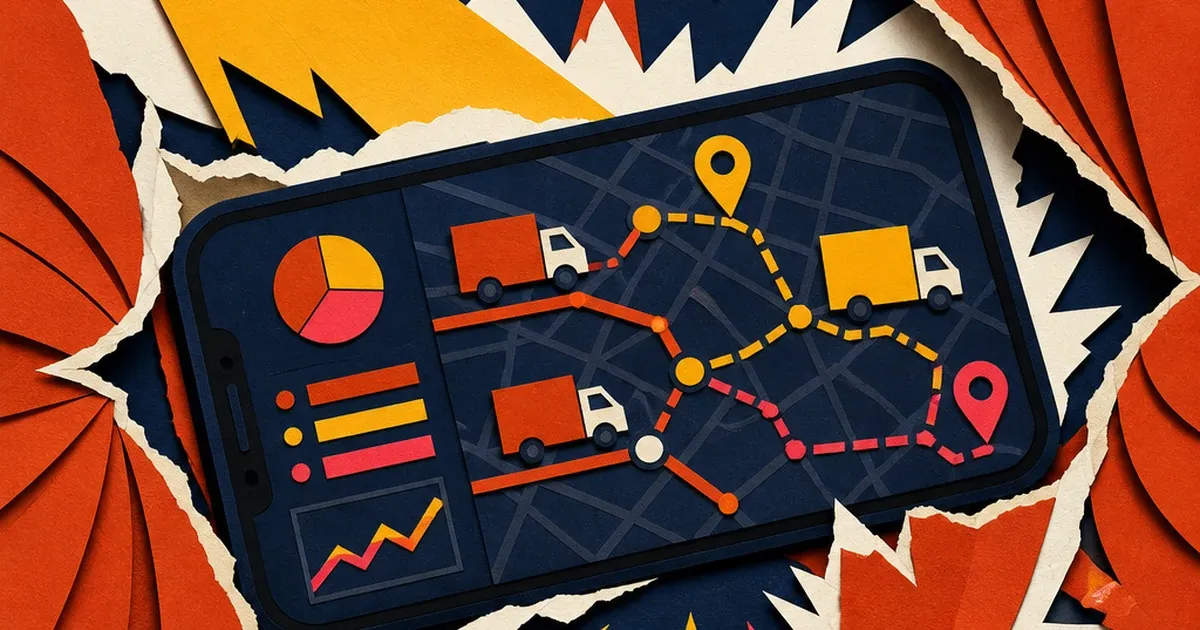
Genre: thriller. Story: A small logistics team is buried in manual scheduling, missed handoffs piling up every week, deadlines slipping one by one. A dispatcher opens a new tool on her phone during a crisis call. The system reroutes three trucks in real time while she watches, stunned. Cut to: the whole team, calm, on time, watching the dashboard update itself. Title card: "The chaos ends now." Available October 1.
That's a story a trailer generator can turn into acts, because it already has a before, a turn, and a payoff. "Our app has real-time routing and a clean dashboard" is a feature list. It won't render as a trailer because there's no story in it to cut around.
Casting matters too. Each cast entry needs a character name (not an actor name) and a short description the generator uses to style the render, like "female, 30s, exhausted but sharp" or "male, 40s, skeptical." One to three cast members is the ceiling. A trailer with a single lead dispatcher character carries a launch story better than an ensemble cast trying to cover every persona your product serves. Pick the one person whose problem the launch actually solves and build the story around her.
Duration, resolution, and the honest tradeoff
The tool ships two runtimes only: a tighter 30-second two-act cut, or a fuller 45-second three-act cut. For a launch-day social ad, the 30-second cut is usually the better fit. A three-act structure needs room to breathe, and 45 seconds gives it that room without dragging into full-trailer runtime that a scroll won't tolerate.
Resolution runs 480p, 720p, or 1080p, and there's a real cost decision buried in that choice: the generator renders multiple candidate cuts and blind-judges them before returning a winner, and that judge pass scales roughly linearly with how many candidates it renders. A fast preview at a lower judge-sample count returns something to look at quickly. A full quality pass at 1080p with the maximum candidate count can take over an hour to land. Budget for that difference before you fire the real render on a launch-day deadline: run the fast preview first to check the story reads the way you intended, then commit the higher-fidelity render once the beats are confirmed.
AI-generated movie-trailer-style ad for a logistics scheduling app: dispatcher, phone reroute, calm team payoff, thriller genre, 30 second cut
One honest disclosure on this specific render: the generator's title-card text came back as "ROUTEZERO" and "COMINGSOON" with no spaces between words, a known AI-video text-rendering limitation on short on-screen title cards rather than a story or genre problem. The dispatcher scene, the phone-reroute turn, and the calm-team payoff beat all rendered as scripted. Treat the story-to-footage pipeline as the reliable part and expect to redo a title card by hand in a simple caption tool if the words need to be crisp for a real launch.
What to do with the cut once it lands
A trailer works differently from a straight product ad in how it gets served, and the Fox case study is the model to copy here, not just cite. Don't run the full trailer once and stop. Use it as the anchor: the first thing a cold audience sees. Anyone who watches it through gets a shorter follow-up cut later, maybe a 10-15 second version that leans harder on the release date and drops the setup entirely, since they've already seen the world-building. Anyone who skips it gets a different, faster cut that leads with the payoff instead of the buildup. That sequencing is what turned a single ad into a 149% consideration lift in the Fox data, and it costs nothing extra to set up if the trailer already exists in multiple runtimes.
For a product or app launch specifically, this maps onto a familiar funnel without requiring new infrastructure: the 45-second trailer runs to a cold prospecting audience in the two weeks before launch, a 30-second cut retargets anyone who watched more than half of it, and a 10-15 second "available now" cut goes out the day the product actually ships. That's three assets, one story, one genre, one cast, generated from the same brief.
Building this into an Ad Studio launch sequence
The trailer format is a hook, not a replacement for the rest of a launch's creative. Once the anticipation phase has done its job, the campaign still needs the product-detail work: the cinematic product shots (generate_cinematic_video's product-shot and product-doc presets) that show what actually shipped, the ad copy that turns a landing page into headline and body text, and the resize/translate pass that gets the winning creative into every placement and market. A launch built entirely on trailer-style teasers with nothing behind them burns the anticipation without paying it off. A launch that never builds anticipation just competes for attention on feature lists.
The sequence that works: tease with a trailer two weeks out, follow with the cinematic product reveal at launch, then keep both assets alive in resized and translated variants across every market the launch targets. Ad Studio's template pipeline is what turns each of those steps into a launch-ready asset instead of a raw generation you still have to edit, caption, and format by hand. Run the genre-and-story brief through Ad Studio, get a launch-ready trailer template back, and start the anticipation clock before your product page even goes live.
FAQ
Does the trailer genre need to match my product's category? No. It needs to match the emotional promise of the launch. A thriller genre for a logistics tool works because the story is about eliminating chaos under pressure, not because logistics software is inherently thrilling.
How long should the story brief be? Long enough to have a real beginning, turn, and payoff, short of the 2,000-character cap. A one-line feature description won't give the generator anything to build acts around.
Can I use a trailer-format ad without a cast/character? The tool requires one to three cast entries with a name, description, and asset reference, so a fully cast-free trailer isn't supported on this lane. Pick the single persona whose problem the launch solves and build around that one character.
What's the fastest way to preview a trailer idea before committing to a full render? Run a lower judge-sample count first (trading judge quality for speed) to confirm the story reads the way you intended, then re-render at the higher-fidelity setting once the beats are locked.
Does this replace the product demo ad I'd normally run at launch? No. It's the anticipation-building step that runs before the demo ad, not a substitute for showing the finished product. Pair it with a cinematic product-shot cut for the actual launch day.
Sources
Mandler, T., Kupfer, A.K., Hennig-Thurau, T., Schauerte, R., Cziehso, G.P. (2025). "The contagious nature of pre-release consumer buzz: How observing other consumers' anticipation for a new product influences adoption." Journal of Product Innovation Management, 42(6), 1044-1067. onlinelibrary.wiley.com/doi/full/10.1111/jpim.12785 Haller, M. (2018, updated 2018). "Why your online video strategy should be more than uploading your TV spot." Think with Google, 20th Century Fox UK case study on The Greatest Showman ad sequencing. thinkwithgoogle.com

Isidora Matovic
Author
Social media enthusiast and a full time researcher. She takes digital presence very seriously and that is why you are always in touch in what is going on with us! Follow us for more posts like this.