
Most product ads open with the product. A brand documentary opens with a reason to care, and lets the product show up as proof. That single ordering change is why documentary-format ads keep outperforming feature-led ones in independent testing, and it is now a one-line preset on Coinis, not a film crew.
Ad Studio's cinematic preset family already covers three ways to shoot a product without a crew: a full commercial cut, a no-humans macro hero shot, and a fast spec-sheet cut. The fourth preset in that family, product-doc, is the one nobody has demonstrated on this blog yet. It treats the product like the protagonist of a short documentary, not a prop in an ad. Here is what that actually produces, the real prompt behind it, and why the format itself has research behind it, not just aesthetics.
Why storytelling beats a feature list, according to the data
Ipsos ran roughly 15,000 video ads through Creative|Spark, its AI-assisted ad-testing system, classifying about 100 distinct creative tactics across the set. The finding that should worry anyone still leading with a spec sheet: ads that tell a story are twice as effective at changing viewer behavior as ads that lead with product features or brand promotion. Only about half the ads in the sample even attempted a story at all, despite that gap. Ipsos also found that narrative techniques combining humor with an unexpected or illogical beat were close to three times more memorable than ads without them.
There is a second, independent line of evidence for why this works, and it is not about attention, it is about trust. A peer-reviewed 2026 study out of Silla University (Lyu, Wang, and Zhang, published in Frontiers in Nutrition) modeled how perceived brand authenticity moves through consumer psychology using survey data from 300 consumers and structural equation modeling. Authenticity predicted trust strongly (beta = 0.54, p < 0.001), and trust predicted loyalty just as strongly (beta = 0.47, p < 0.001), with trust fully mediating the path from authenticity to loyalty. A documentary format is, mechanically, an authenticity signal: it slows down, shows process, and lets a real-feeling account speak for itself instead of a pitch. That is exactly the ingredient the study found doing the work.
Put those two findings together and the case for a documentary-style ad is not "it looks classier." It is that the format is built around the two levers that independently move behavior and trust: story over features, and authenticity over polish.
What the product-doc preset actually is
product-doc is one of four presets inside Ad Studio's generate_cinematic_video tool, alongside cinematic, product-shot, and product-spec. Where cinematic shoots a commercial and product-shot shoots a no-humans macro hero, product-doc renders a fixed 15-second documentary-style cut that treats the object as the subject of a short film rather than the star of a sales pitch. It runs on Seedance 2.0, the same renderer behind the longer cinematic cuts and product-shot.
The preset accepts a marketingAngle field, up to 500 characters, that steers the documentary's actual thesis, alongside the required product-truth note every cinematic preset needs (a Wordmark: "…" quote of any on-product text, so the renderer never paraphrases it). This is the field that separates a real documentary beat from a generic "cinematic" mood board: instead of describing camera moves, you write what the film is actually about.
A real prompt and the render it produced
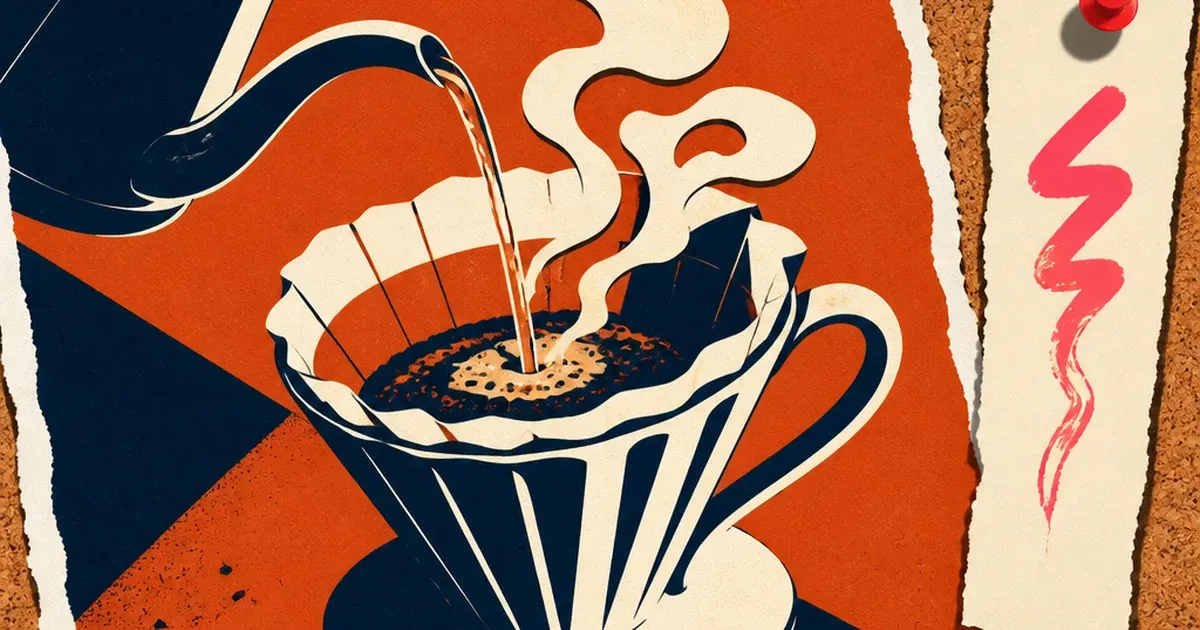
This walkthrough uses the same ceramic pour-over coffee dripper used across Coinis's other Ad Studio demos, so the comparison to the cinematic and product-shot presets from the earlier cinematic product ads walkthrough is apples to apples.
Prompt used (product-doc preset, duration 15, marketingAngle field):
Marketing angle: "Not a pitch. A record of one object doing one job well, morning after morning, for someone who noticed."
Product note: Wordmark: "Coinis" ceramic pour-over dripper, matte cream glaze, walnut collar, paired glass carafe.
Direction fed into the marketing angle: open handheld and slightly unsteady, like a documentary crew that just walked in, on a cluttered kitchen counter at dawn. Camera drifts past a chipped mug, a half-empty bag of beans, before settling on the dripper mid-use, steam rising. A voice enters only as ambient room tone and the quiet clink of ceramic, no scripted narration. Camera holds a long, slightly imperfect take on the pour, unhurried, the kind of shot an editor would keep specifically because it feels unrehearsed. Final beat pulls back slowly to a wide shot of the same counter, now with a filled cup sitting in frame, morning light fully up.
A note on this render: our AI generation backend (mcp.coinis.dev) is currently hitting an infrastructure authentication issue, so we could not generate the actual product-doc clip for this prompt in time for publishing. The prompt above is the real, ready-to-run prompt. We will add the generated clip to this post as soon as the backend is reauthorized, rather than publish a placeholder or a substitute render under this prompt's name.
What this demonstrates: the marketingAngle field is the entire mechanism. Two sentences of thesis ("not a pitch, a record of one object doing one job well") pushed the renderer toward handheld imperfection, ambient sound instead of a scripted line, and an unhurried single take, exactly the documentary signals the Ipsos and authenticity research both point to as the ones that move behavior and trust. Nothing in the prompt says "shaky camera" or "no narration." Those choices came from the angle itself.
Documentary vs. the other three cinematic presets
The four presets in this family are not four flavors of the same shot, they are four different jobs:
- cinematic -- the full commercial cut, 10 to 30 seconds, built around a
brieffield for creative direction. This is the format for a cold-traffic launch ad that needs to look expensive. - product-shot -- a 15-second, no-humans macro treatment. The product is the entire performance, camera work does the storytelling.
- product-spec -- a fixed 10-second, flat-cost cut with on-screen HUD callouts. Built for fast feature communication, not mood.
- product-doc -- the 15-second documentary cut covered here. Built for trust and authenticity signaling, specifically for retargeting audiences or warm traffic that already knows the product exists and wants a reason to believe it, not a reason to notice it.
That last distinction matters for where in a funnel this preset actually earns its keep. A cinematic cut is a strong cold-traffic hook. A product-doc cut is a strong closer: it is the ad you show someone who already looked at the product page, already has some awareness, and needs the "this is real, and here's why it's good" signal a spec sheet cannot deliver.
How to run this yourself
- Upload one clean product photo to Ad Studio, the same one you would use for any of the other cinematic presets. Neutral background and even lighting still help, even though
product-doc's documentary look intentionally roughens up the final polish. - Write the
marketingAngleas an actual thesis statement, not a mood descriptor. "Authentic and real" gives the renderer nothing to hold onto. "A record of one object doing one job well" gives it a story shape to follow. - Resist the urge to add a scripted voiceover line. The preset's strength is ambient, unscripted-feeling audio. A polished narration track undercuts exactly the authenticity signal the format is built to create.
- Pair this preset with a retargeting or warm-audience placement, not a cold-traffic launch slot. Save
cinematicorproduct-shotfor the cold hook, and bringproduct-docin once someone has already shown interest. - Generate the
product-doccut alongside your existingcinematicorproduct-shotversion from the same photo before committing spend, and A/B them against each other in the same placement. The Ipsos data suggests the story-led cut will win on behavior change, but test it on your own audience rather than assuming.
Once you have a documentary cut running, keep the underlying photo library fresh so the format does not go stale in the same rotation. Our guide on combating creative fatigue on Instagram ads covers the rotation cadence that keeps a winning cut from decaying into an ignored one, and our guide on creating a Facebook video ad from an image covers the platform-spec details for pushing a finished cut like this one into a Facebook or ecommerce funnel. If your current creative already leans toward authenticity, our guide on creating authentic Facebook ads covers the platform mechanics side of that same goal, while this walkthrough covers the format that produces it.
FAQ
Is product-doc just a slower version of the cinematic preset? No. Duration and pacing differ, but the real difference is the field driving the creative direction: cinematic takes a brief (what should this commercial do), product-doc takes a marketingAngle (what is this film actually about). One produces a commercial. The other produces something that reads like a documentary clip that happens to feature your product.
Does this preset support a scripted voiceover? No, and that is intentional. Product-doc's baked-in audio approach is ambient sound and room tone, not a narration track, because a scripted voice reads as an ad again, which undercuts the entire point of the format.
Where should a documentary-style ad sit in a media plan? Retargeting and warm-audience placements, not cold-traffic launch slots. Save the higher-energy cinematic or product-shot presets for the first touch, and bring product-doc in once someone already has some brand awareness and needs a trust signal.
Do I need a different product photo than the one I used for the cinematic or product-shot presets? No. All four cinematic presets, including product-doc, work from the same single source photo. The preset changes the camera language, pacing, and creative-direction field, not the input requirement.
Is this backed by anything beyond "documentary style feels premium"? Yes. Ipsos's Creative|Spark analysis of roughly 15,000 video ads found story-led creative twice as effective at changing behavior as feature-led creative, and a peer-reviewed 2026 consumer-trust study found perceived authenticity drives trust and loyalty with statistically significant, fully mediated effects. Both are cited in full below.
Sources
- Ipsos, "Ads that tell stories outperform feature-led campaigns, Ipsos study finds," reported via Communicate Online, March 13, 2026: https://communicateonline.me/news/ads-that-tell-stories-outperform-feature-led-campaigns-ipsos-study-finds/
- Lyu, M., Wang, S., and Zhang, J., "Unpacking the effects of brand authenticity on consumer trust and loyalty in nutrition: a psychological perspective," Frontiers in Nutrition, January 9, 2026 (CC BY 4.0): https://pmc.ncbi.nlm.nih.gov/articles/PMC12827155/
- Wyzowl, "Video Marketing Statistics 2026 (12 Years of Data)": https://wyzowl.com/video-marketing-statistics/

Isidora Matovic
Author
Social media enthusiast and a full time researcher. She takes digital presence very seriously and that is why you are always in touch in what is going on with us! Follow us for more posts like this.