
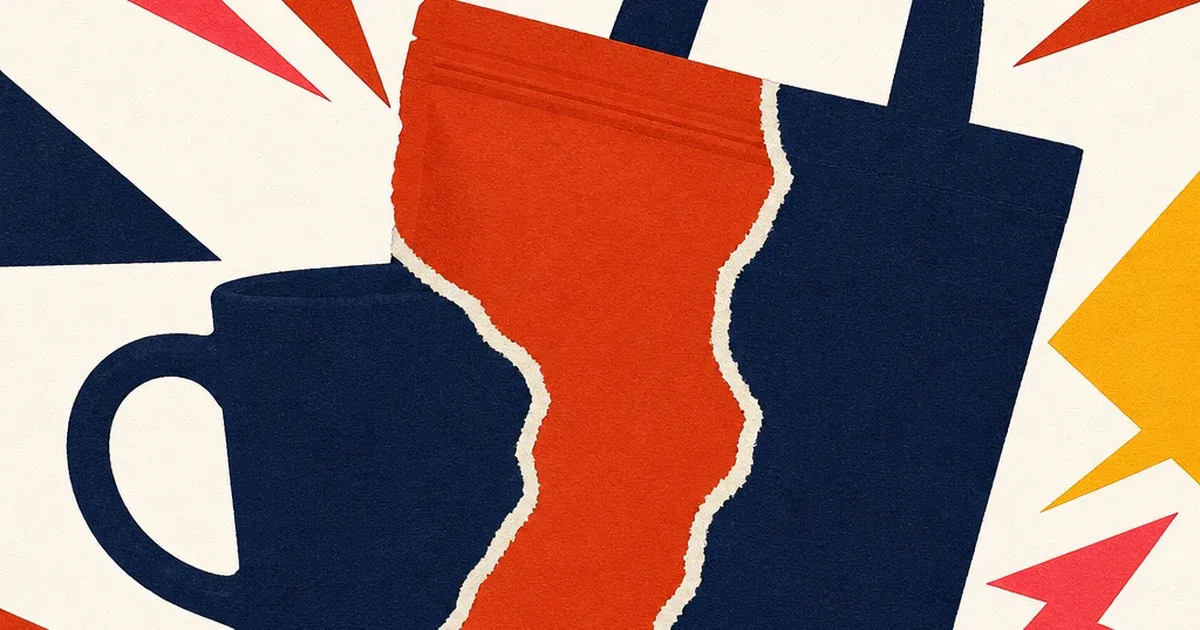
Every ecommerce seller eventually tries a bundle. Buy the mug, the pouch, and the tote together, save a few dollars versus buying them one at a time. The offer is simple. The ad for it usually isn't, because most bundle ads make the same mistake: they show three separate product photos lined up next to each other, as if the shopper is still comparing three individual purchase decisions instead of one.
A 2017 study in the Journal of Marketing Research found that shoppers don't actually process a bundle that way, and the gap between how a bundle is perceived and how it's usually photographed is exactly what Ad Studio's bundle preset is built to close.
The research behind why a bundle isn't three products
Franklin Shaddy and Ayelet Fishbach, both at the University of Chicago Booth School of Business, ran six experiments testing what they called the asymmetric effect of bundling on valuation. Their core finding: once items are presented together as a bundle, whether by physically binding them, placing them in one labeled container, or simply describing them together, people stop evaluating them as separate purchases and start evaluating them as one combined object. The researchers call this a Gestalt, a whole that is perceived differently than the sum of its visible parts.
That perceptual shift has a strange consequence for pricing. Shoppers demand more compensation for losing one item out of a bundle than they would for losing the same item bought on its own, since removing a piece from a perceived whole feels like damaging something complete. But shoppers are not willing to pay proportionally more when an item is added to a bundle, because the addition doesn't feel like gaining something separate, it feels like the whole just got slightly bigger. As Fishbach put it in the University of Chicago Booth School's own press release on the study, "for bundles, consumers both pay less, yet demand more."
The practical lesson for anyone building a bundle ad: the image has to sell the whole, not the parts. A photo of three disconnected products side by side invites a shopper to evaluate each one on its own, the opposite of the perceptual shift that makes bundling work in the first place.
What the bundle preset actually does
The preset is built around exactly that constraint. Feed it two or more real products that are genuinely sold together as a set, and it composes them into a single ad built around the set, not three separate product shots stitched into one frame. Ad Studio's own documentation is explicit about this: without at least two real products supplied, the agent falls back to a single-product ad instead, because there's no set to render as a whole.
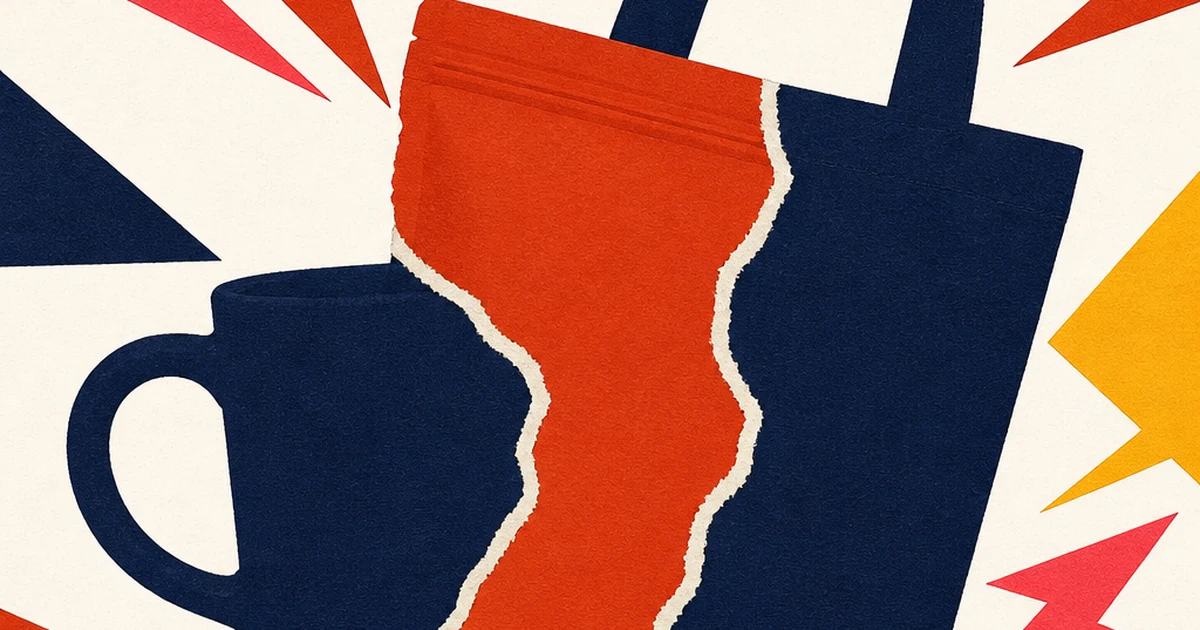
This is the first preset in this mini-series built around more than one product. The knolling preset also arranges multiple items, but knolling's whole point is visible separation, straight lines and even spacing between distinct pieces laid out for a flat-lay shot. The bundle preset does close to the opposite: it wants the set to read as one connected offer, not a neat row of individually-inspectable objects. The colour variants preset is the closest sibling in mechanics, one product photo expanding into several images, while bundle takes several real products and compresses them into one image, the inverse shape.
The gestalt test, translated into a brief
Shaddy and Fishbach's finding is specific enough to brief directly. The products in the image need to read as belonging to each other, not as three items that happen to share a frame. A brief that just lists three product photos and asks for "a bundle ad" risks exactly the side-by-side-comparison composition the research says works against the bundle's own psychology.
Worked example: a travel set, not three unrelated items
Start with products that already make sense as a real set, not three unrelated SKUs forced together for the demo. The brief for the preset:
Preset: bundle
Products: [two or more real product photo URLs, e.g. a travel mug, a reusable snack pouch, a collapsible tote]
Framing: one unified composition showing the set together as a single combined offer, not three separate product shots side by side
Offer line: [one short, true line naming the set and the saving, e.g. "The Travel Set. Save when you buy all three."]
Avoid: any item floating disconnected from the group, any invented fourth item, any discount percentage not supplied in the brief, garbled or illegible text

This is a real generate_image_preset_agent render, preset bundle, fired against two or more demo product photos with the exact prompt above. The output should show every supplied product, arranged as one connected set rather than disconnected items, with legible offer-line text and zero invented extra product or claim beyond what the brief supplies.
FAQ
Does the bundle preset work with just one product? No. The preset's own requirements call for two or more real products sold as a set. Supply only one, and the agent builds a single-product ad instead, since there's no combined set to render.
Why does the composition matter more than the discount for a bundle ad? Because shoppers don't evaluate a bundle item by item once it's presented as one object. Shaddy and Fishbach's research found that a bundle is perceived as a Gestalt, a whole distinct from its parts, so a photo that visually separates the items into a row of individual shots works against the exact perception that makes the bundle offer land.
Is this the same as the knolling preset? No. Knolling arranges multiple items with visible separation and even spacing, built for a clean flat-lay look. The bundle preset composes multiple items as one connected set meant to read as a single combined offer, the opposite visual goal.
What should the offer line actually say? One short, true line naming the set and what buying it together saves. The preset renders exactly what the brief supplies, so an invented discount percentage or a claim about savings that isn't locked in will render as confidently as a true one, the same fabrication risk already documented for the statistics-data preset's literal-number guardrail.
What kinds of products work best for this preset? Products that a shopper would plausibly buy together for a shared purpose, a travel kit, a skincare routine, a starter set. Three unrelated items thrown together as a "bundle" won't read as one coherent set no matter how the preset composes them.
Try it on Coinis
Pick two or three products a shopper would genuinely buy together, write one honest line naming the set and the saving, and let the preset build it as one combined offer instead of three separate product shots. Ad Studio's bundle preset handles the composition in one generation.
Start building launch creative on Coinis
Sources
- Shaddy, Franklin, and Ayelet Fishbach, "Seller Beware: How Bundling Affects Valuation," Journal of Marketing Research, October 2017: https://journals.sagepub.com/doi/10.1509/jmr.15.0277
- University of Chicago Booth School of Business, "Buyer and seller beware: Bundling affects how consumer products are valued," press release, February 7, 2017: https://www.chicagobooth.edu/media-relations-and-communications/press-releases/buyer-and-seller-beware-bundling-affects-how-consumer-products-are-valued

Isidora Matovic
Author
Social media enthusiast and a full time researcher. She takes digital presence very seriously and that is why you are always in touch in what is going on with us! Follow us for more posts like this.