

You finished the ad. Feed looks great. Then someone asks for the Story version, the Reel crop, the square carousel card, the Google Display banner. Four more files, four more rounds of manual cropping, and the hero product is now half-cut-off in two of them.
This isn't a one-time tax. It's a recurring one, every single campaign, for as long as you're running ads on more than one placement.
Why one image was never going to be enough
Meta's own 2026 placement data makes the problem concrete. Three aspect ratios now cover roughly 90% of ad delivery across Facebook and Instagram: 1:1 square for Feed and Search, 4:5 vertical for Feed on mobile (Meta's own recommended default over square), and 9:16 full vertical for Stories, Reels, and TikTok. A single 1080x1080 export satisfies none of the vertical placements properly, and a 9:16 export gets cropped or letterboxed everywhere it doesn't belong.
TikTok compounds it. Its in-feed ads default to 9:16, but the platform also runs 1:1 and 16:9 in specific slots, and TikTok will auto-pad a mismatched file with black bars rather than reject it, which quietly tanks the ad's screen presence without ever throwing an error. (See our full breakdown of TikTok ad sizes and dimensions for every current spec.)
None of this is a "nice to have" problem. NCSolutions and Nielsen's meta-analysis of nearly 450 campaigns found creative is the single largest driver of incremental sales lift, at 49%, ahead of targeting, reach, and recency combined. If the creative itself is what moves sales, then a creative that displays wrong on half your placements isn't a formatting inconvenience. It's lost lift you already paid media budget to generate.
The actual cost is hours, not pixels
Reformatting by hand looks small per ad. It isn't small across a campaign. A typical launch needs at least three source files (square, vertical feed, full vertical) before it even reaches TikTok or Google's own separate spec sheet. Multiply that by every product, every seasonal refresh, every platform a brand runs on, and the "quick resize" becomes a standing line item on someone's week: reopen the design file, reframe the subject so the crop doesn't cut off the product or the CTA, re-export, re-upload, re-check every placement preview.
Advantage+ and Meta's Flexible creative pipeline made this worse in one specific way: they now expect advertisers to supply multiple aspect ratios up front so the system can pick the best combination per placement. Submit only a square asset and the algorithm has less to work with, not more. The format-fragmentation problem got its own product requirement.
What you can generate on Coinis instead
Ad Studio's generate_image_templates tool takes one product photo and fans it out across every aspect ratio a campaign needs in one generation pass, not one manual export per placement. Point it at a product (a URL, an attached photo, or a product already in your Coinis catalog) and it builds new, on-brand creative for each format you request, using the product's own catalog images as the visual reference so the ad shows the real product, not a generic stand-in.
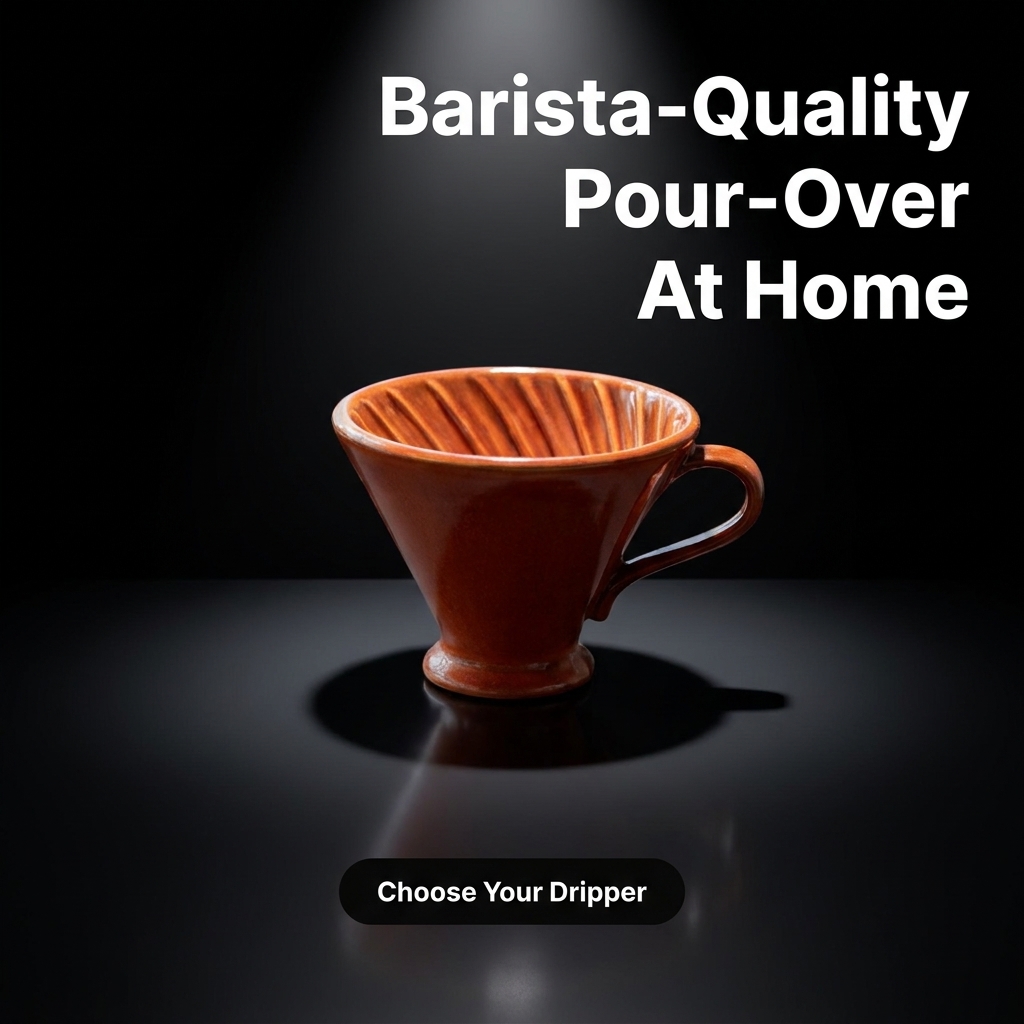
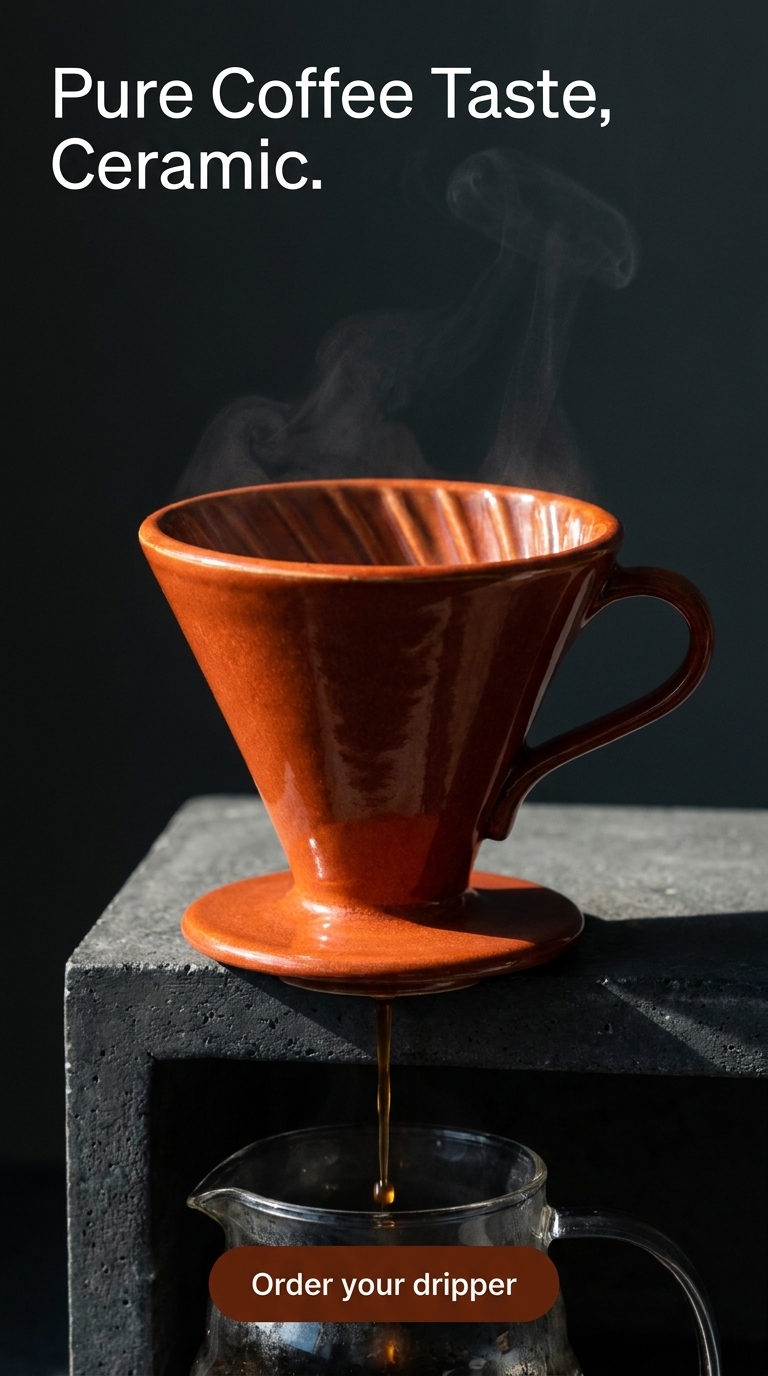
Real prompt used with Ad Studio's generate_image_templates tool, one product photo in, two aspect ratios out in the same call:
Product: a ceramic pour-over coffee dripper, warm terracotta glaze, on a plain kitchen counter photo. templateCategory: hero-shot. outputFormats: [square, story]. Style direction: clean product-hero composition, soft directional light, the dripper filling the frame with room for a headline safe zone in the top third on the vertical crop. No invented logo, no on-image copy beyond a short headline placeholder.
The tool doesn't crop one master image down and hope the framing survives. It generates each aspect ratio as its own composition, so the vertical version isn't a cropped square with the product's edge cut off. It's a version built to fill a 9:16 frame from the start.
Building this into a repeatable launch step, not a one-off fix
A single multi-format batch fixes one campaign. The bigger win is treating format fanout as a default step, not an afterthought:
- Generate the full format set at brief time, not after the client asks. Request square, 4:5, and 9:16 together on the first pass so every placement has a native-fit asset before the campaign goes live, instead of scrambling for the missing crop after launch.
- Keep the source photo consistent across a product line. Reusing the same catalog product across multiple
generate_image_templatescalls keeps brand color and product framing consistent, so a five-SKU campaign doesn't end up with five different visual treatments. - Treat Advantage+ and Flexible creative as a reason to over-supply formats, not under-supply them. The algorithm can only route to a placement if a properly-fit asset exists for it. Submitting only one ratio caps how much of the system's own optimization you actually get to use.
- Refresh the set on a cadence, not just at launch. The same fatigue curve that hits a single ad hits an entire format set. When one crop starts underperforming, regenerate the whole batch instead of patching the one weak file.
Run this through Coinis' Ad Studio and the reformatting step disappears entirely. One product photo in, a full set of launch-ready, placement-correct creative out, so the only manual work left is picking which version to ship first. Ad Studio's other generation tools cover the same launch-ready ground for cinematic product ads and fighting creative fatigue in gaming ad sets.
FAQ
How many ad formats do I actually need to cover most placements? Three: 1:1 square, 4:5 vertical, and 9:16 full vertical. Together they cover roughly 90% of Meta ad delivery and most of TikTok, Snapchat, and YouTube Shorts as well. Google Display and a handful of legacy placements need their own separate specs, but those three ratios are the baseline every campaign should start with.
Does a cropped square image work as a substitute for a proper vertical ad? Technically it will upload without an error, but it performs worse. A center-cropped square loses the extra vertical space that 4:5 and 9:16 placements are built to use, and platforms like TikTok will pad a mismatched ratio with black bars rather than reject it, which shrinks the ad's visible size on screen without any warning that it happened.
Why does Meta's Advantage+ system specifically ask for multiple aspect ratios? Advantage+ and Flexible creative assemble the best asset-to-placement match automatically, but only from what you give it. If you supply just one ratio, the system has nothing to route to the placements that need a different shape, so part of its own optimization goes unused. Supplying square, vertical feed, and full vertical up front gives it real options to work with.
Can I generate every format from a single product photo, or do I need a fresh photoshoot per size? A single product photo is enough as the source. Ad Studio's generate_image_templates builds a new, correctly-composed creative for each requested aspect ratio from that one source image, rather than cropping one master image down and losing framing in the process.
Does creative quality really matter more than targeting for ad performance? Per NCSolutions and Nielsen's meta-analysis of nearly 450 campaigns, yes: creative accounts for 49% of incremental sales lift, the single largest driver measured, ahead of targeting, reach, and recency. A well-targeted ad that displays wrong on half its placements is still leaving that creative-driven lift on the table.
Sources
- Meta for Business, "Aspect Ratios Supported by Placements in Meta Ads Manager," 2026. https://www.facebook.com/business/help/682655495435254
- Hootsuite, "Social Media Image Sizes for All Networks," updated July 2026. https://blog.hootsuite.com/social-media-image-sizes-guide/
- AdDogs, "Social Media Ad Sizes and Specs for Every Platform (2026)," 2026. https://www.addogs.ai/blog/ad-sizes-specs-every-platform
- Circana / NCSolutions, "The Right Five Keys to Unlock Advertising Effectiveness" (Nielsen/NCSolutions meta-analysis, ~450 campaigns), 2023, cited as current methodology through 2026 industry coverage. https://www.circana.com/post/the-right-five-keys-to-unlock-advertising-effectiveness

Isidora Matovic
Author
Social media enthusiast and a full time researcher. She takes digital presence very seriously and that is why you are always in touch in what is going on with us! Follow us for more posts like this.