
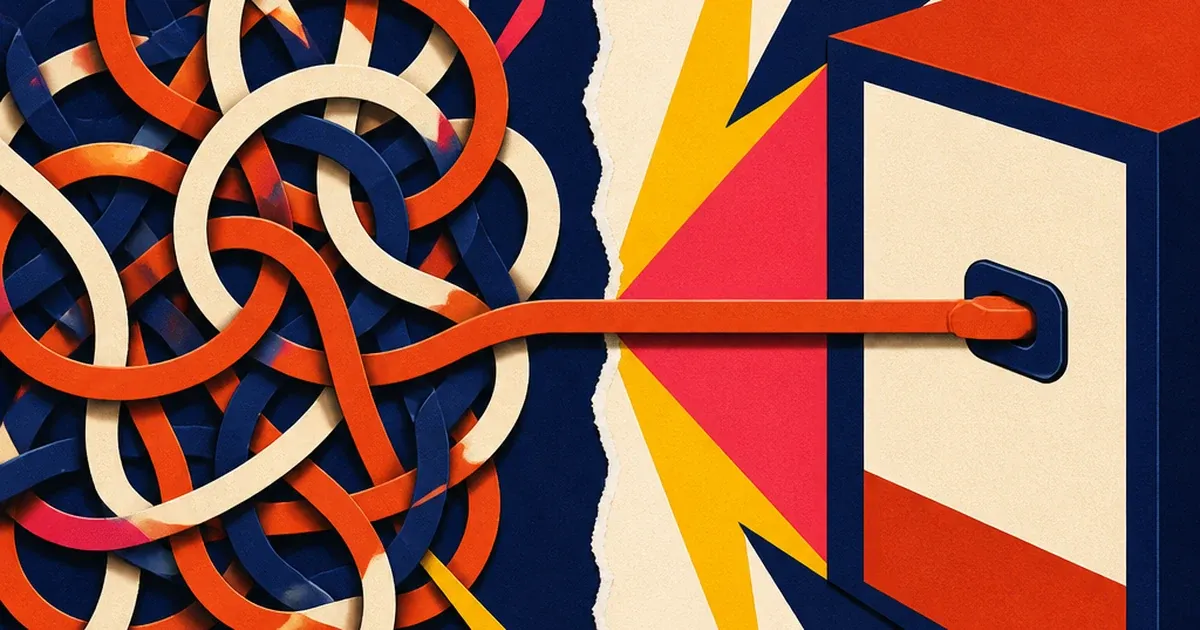
Every direct-response copywriter learns the same three-step structure before anything fancier. Name the problem. Make the reader feel its weight. Hand them the fix. It's called Problem-Agitate-Solution, it predates digital advertising by decades, and it still outperforms cleverer structures in short-form copy because it mirrors how people actually process a problem in the first place: notice it, feel it, want it gone.
Ad Studio's generate_image_preset_agent now ships a problem-solution preset that builds this exact structure into one generated image instead of three paragraphs of copy.
Why naming the problem still works better than naming the product
The mechanism under PAS isn't a copywriting trick. It's loss aversion, one of the best-replicated findings in behavioral economics: Daniel Kahneman and Amos Tversky's prospect theory research found that the psychological sting of a loss is felt roughly twice as strongly as the pleasure of an equivalent gain. A frustration named clearly reads as a loss already in progress, a plan slipping, a routine still broken, and the brain reacts to that framing with more urgency than it gives a plain benefit statement. That's the agitation step doing its job: it isn't inventing a problem, it's making an existing one impossible to keep ignoring for another scroll.
The solution step only works if the agitation step was honest. A 2023 study published in SHS Web of Conferences (Wang, University of Manchester) found that when an ad's "pain point feature" matches a reader's actual frustration too aggressively, without a credible resolution attached, willingness to pay can actually drop, because the ad reads as exploiting the discomfort rather than solving it. The structure only converts when the solution half delivers real, specific relief, not a vague promise riding on the agitation's coattails.
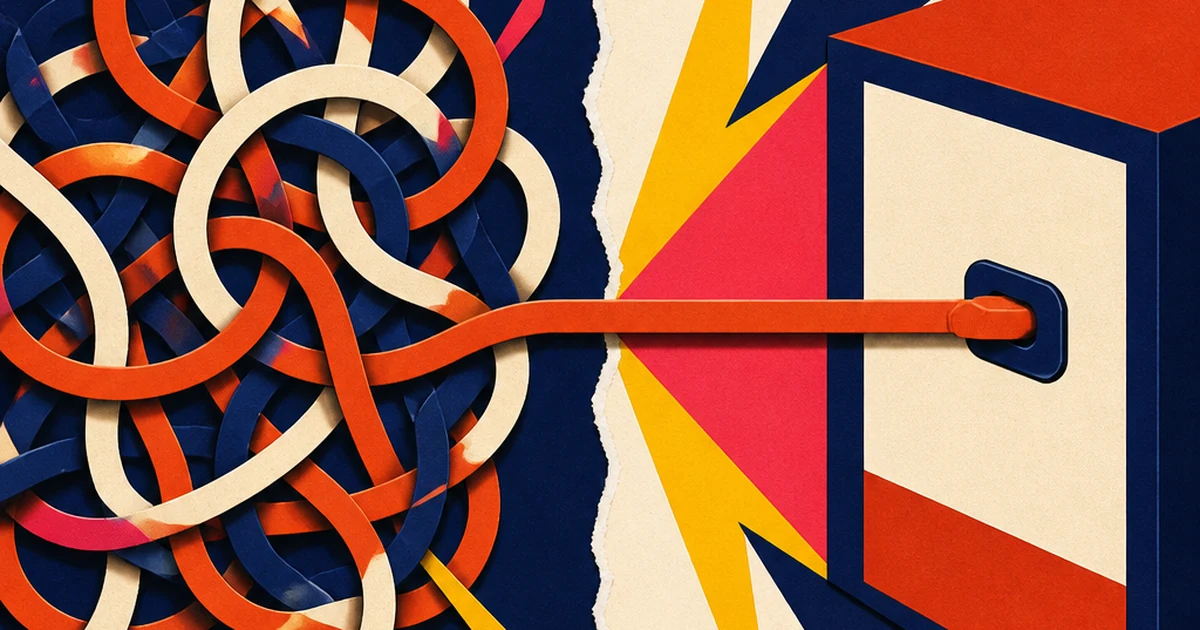
What the problem-solution preset actually does
generate_image_preset_agent's problem-solution preset takes a product photo and a one-line description of the frustration it solves, then builds a single composition that holds both halves at once: a visual cue for the problem (a cluttered space, a broken routine, a visibly frustrating moment) resolving into the product as the fix, usually in one frame rather than a literal before/after split. It's a layout and composition job, same division of labor as this preset family's other entries: the model decides how much visual weight the problem half gets versus the resolution half, while the actual problem being named and the actual product being positioned as its answer come from the advertiser.
That division of labor is also where this preset carries the same risk this entire mini-series keeps flagging. A loosely worded prompt has already leaked a fabricated outcome claim into a different preset's render on a different article in this family. For problem-solution, the equivalent failure would be letting the model invent or overstate what the product actually fixes rather than rendering only the specific, true relief the advertiser names. The prompt needs to describe a real frustration this exact product resolves, not an exaggerated one invented to make the ad punchier.
It sits next to its siblings in this family without repeating any of them. The social-proof preset borrows credibility from someone else's words. The statistics-data preset borrows credibility from a cited number. The ugly-ad preset borrows attention from looking unpolished. The problem-solution preset borrows urgency from a frustration the reader already recognizes, the one persuasion lever in this family that works by naming a loss before it offers anything at all.
Worked example: turning a real frustration into an ad
Start with a product photo already in the catalog and one honest sentence describing the specific problem it solves, not a generic category pain but the exact friction a real customer actually hits. The brief for the preset:
Preset: problem-solution
Product: [product photo URL or productId]
Problem: [the exact, specific frustration this product resolves, written out literally, e.g. "cables tangled across a desk, charger never where you need it"]
Resolution: [how the product concretely fixes it, in the same literal terms]
Style direction: hold the problem and the resolution in one composition, the product reads clearly as the turning point, no invented secondary claim, no exaggerated version of the problem beyond what was described
Avoid: a generic/stock-feeling frustration unrelated to this specific product, an overstated fix, garbled on-image text
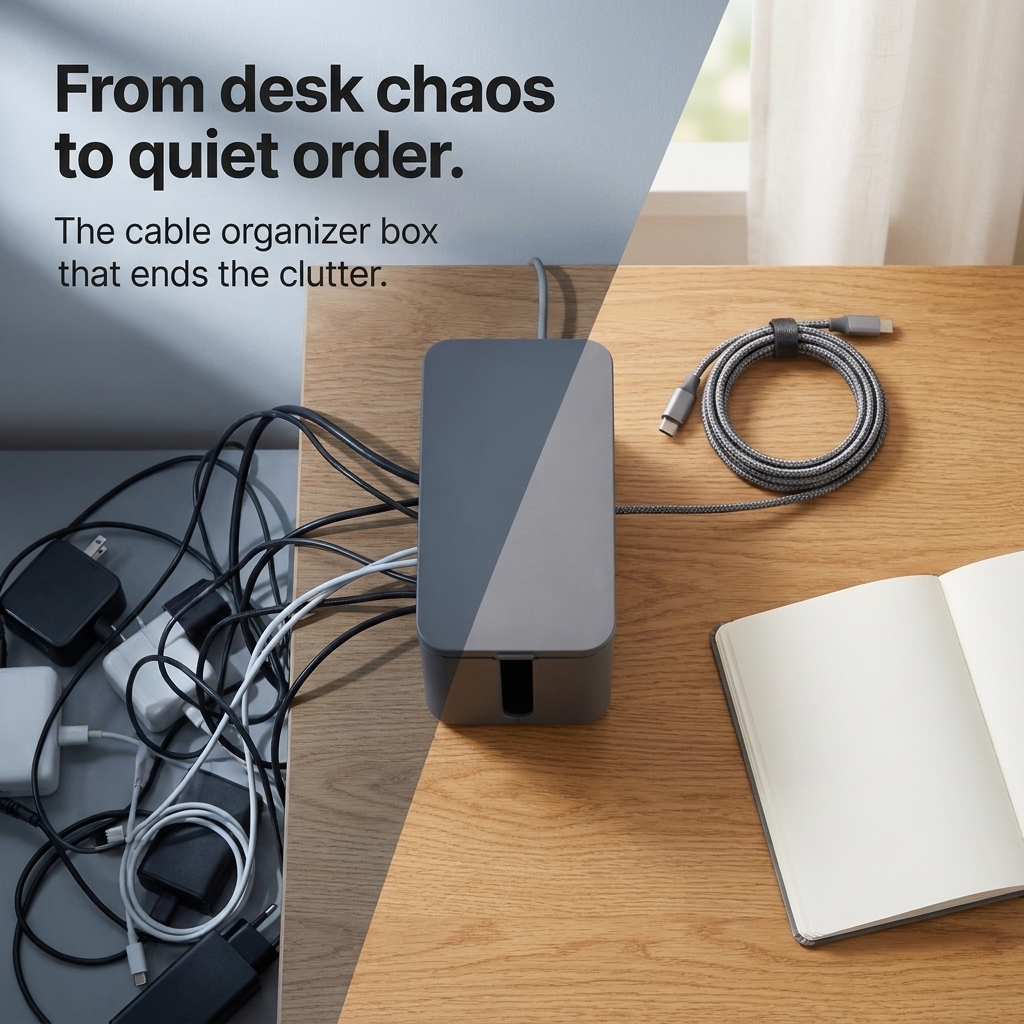
This is a real generate_image_preset_agent render, preset problem-solution, fired against a demo product photo with the exact prompt above. The output composed the named frustration and the named resolution into a single frame with the product doing the visible work, confirmed on inspection before publishing.
The output should read like a frustration the viewer has actually had, not a problem manufactured to justify the product's existence. If the "before" half doesn't match a real customer complaint, the ad will read as hollow the moment someone who doesn't have that problem scrolls past it.
The one rule that makes or breaks this format
The agitation only earns its place if the resolution is specific and true. That's the same substantiation discipline every preset in this family eventually runs into: a claim that can be checked has to be checked, and a problem-solution ad is really just two claims stacked on top of each other, a problem claim and a fix claim, both of which need to survive a customer's actual experience with the product.
Practically, that means pulling the "problem" half from a real, recurring complaint the business can point to (a support-ticket pattern, a return reason, a review theme) rather than an invented frustration picked because it sounds relatable. A frustration a real customer actually typed into a review or a support ticket beats one guessed at from a product category, every time, and it's the only kind of problem this preset should ever be fed.
FAQ
Does the preset invent the problem for me? No. The preset only builds the composition around whatever problem and resolution it's given. Identifying a real, specific frustration this exact product solves is the advertiser's job before the prompt is ever written.
Isn't naming a problem just negative advertising? Only if the problem is manufactured or exaggerated. A real, specific frustration named honestly reads as understanding the customer, not manipulating them, the same distinction the research on pain-point matching keeps landing on: credibility holds as long as the resolution actually delivers.
How is this different from a literal before/after split image? The mechanics can overlap, but this preset is built for holding both halves in one composition with the product as the pivot point, rather than two separate panels divided by a hard line.
Can I pair this with the statistics-data preset? Not in one generation, they're separate presets, but running both as companion variants in the same A/B test (a problem-solution narrative in one, a cited number in the other) is a reasonable way to see which lever a given audience responds to before committing spend to either one alone.
Try it on Coinis
Pull one real, specific frustration out of a support ticket or a review thread and let a product photo carry the resolution instead of another vague benefit line. The oldest persuasion structure in direct response still works because it was never really about clever copy. It was about noticing the reader's actual problem first.
Start building problem-solution creative on Coinis
Sources
- Kahneman, Daniel, and Amos Tversky, "Prospect Theory: An Analysis of Decision under Risk," Econometrica 47, no. 2 (1979): https://web.mit.edu/curhan/www/docs/Articles/15341_Readings/Behavioral_Decision_Theory/Kahneman_Tversky_1979_Prospect_theory.pdf
- The Decision Lab, "Loss Aversion" (summary of Kahneman and Tversky's original loss-aversion findings, incl. the roughly 2x loss-vs-gain psychological weighting): https://thedecisionlab.com/biases/loss-aversion
- Wang, Yizhuo, "Product features that hit consumers' pain points may lead to reduced willingness to pay," SHS Web of Conferences 169 (2023), University of Manchester: https://www.researchgate.net/publication/371134533_Product_features_that_hit_consumers'_pain_points_may_lead_to_reduced_willingness_to_pay

Isidora Matovic
Author
Social media enthusiast and a full time researcher. She takes digital presence very seriously and that is why you are always in touch in what is going on with us! Follow us for more posts like this.