Open Google Ads and check the notification bell. If there is a flag about limited ad serving sitting in there, the bidding lever you keep yanking will not move it. If there is no flag, read on anyway, because the rules that decide who gets one just shifted under everybody, and the trigger is no longer only the thing you would expect.
The takes online are louder than the change itself. One camp says Google is about to wipe half the advertisers off Search. Another says nothing happened, same policy, new headline. Both are wrong. Here is what actually moved, and what it means for the money you put into Search this quarter.
What actually changed on Search
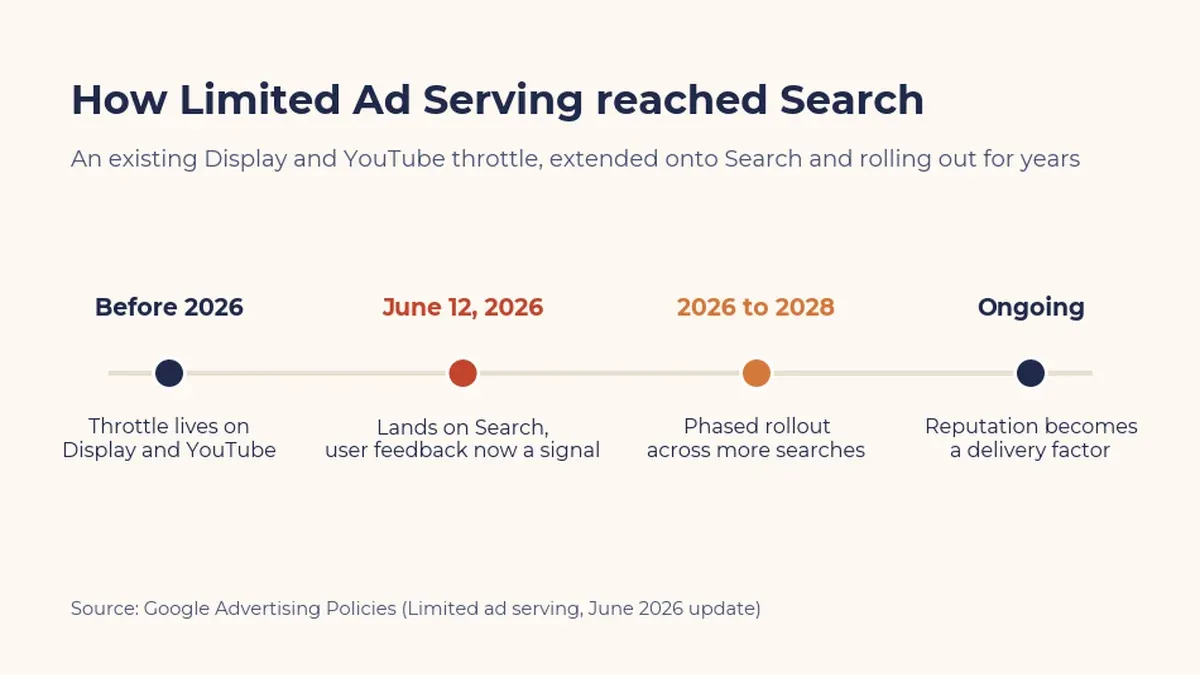
Limited ad serving is not new. It has lived on Display and YouTube for years, a throttle Google puts on advertisers it does not fully trust yet. New accounts. Accounts it cannot verify. The mechanic was always the same: your ads get held back on the auctions most likely to go wrong, until you earn your way out. On June 12 2026 that throttle landed on Search, phased and rolling through 2028, but live now on Google's highest-revenue surface. That is the part worth your attention. Google's own policy page lays out the June 2026 update in plain language.
The second shift is the trigger. Policy violations still count, same as before. But user feedback now feeds the same machine. Persistent, disproportionate complaints that your product is misleading, that your business burned someone, that the ad promised one thing and the landing page delivered another, those reports are an algorithmic signal now. User complaints, in plain terms. Not the kind you answer in your inbox. The kind that quietly decides if your ad shows at all.
Why Google is bothering
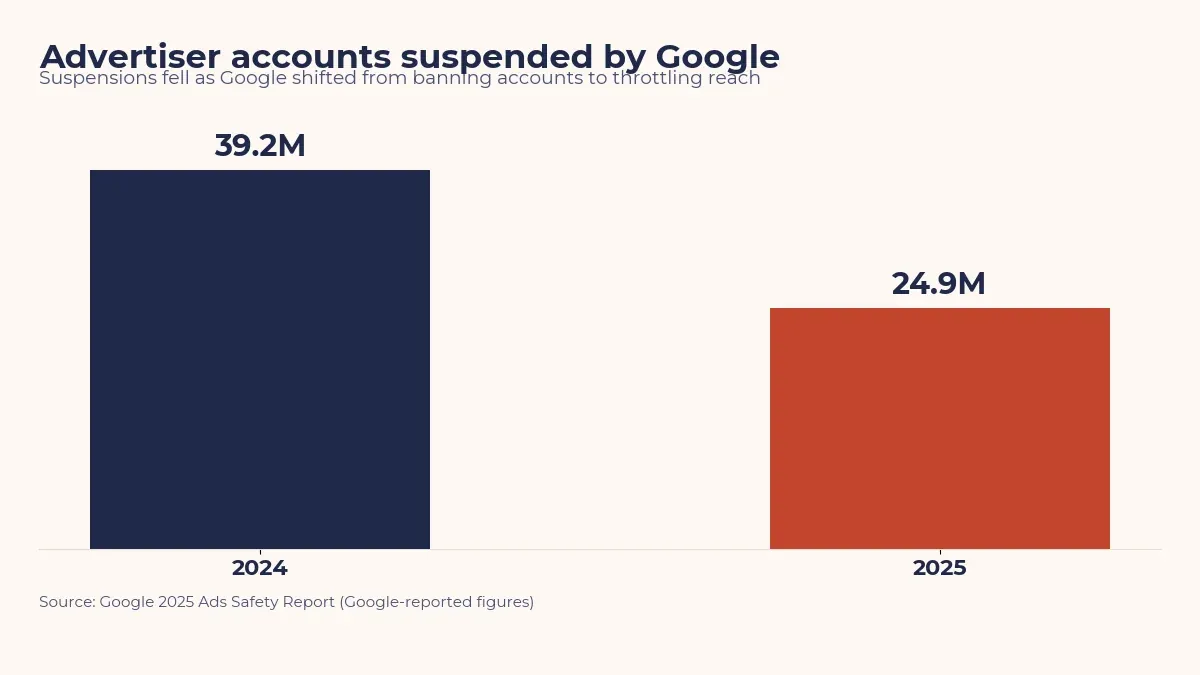
None of this is charity for users, though that is the framing. Look at the scale Google runs at and the logic gets obvious. 8.3 billion ads blocked or removed last year, up more than 60 percent. 24.9 million advertiser accounts suspended, down from 39.2 million the year before. 480 million web pages actioned. Better than 99 percent of policy-violating ads stopped before a single person saw them, Google says, with its Gemini models cutting wrongful suspensions by roughly 80 percent.
Read those two suspension numbers together. Fewer accounts killed outright, far more ads caught at the door. Google is moving off the blunt instrument, banning you, and onto the dial, showing you less. Reputation throttling is that dial. It lets them keep your spend while trimming your reach on the searches they think you will spoil. The figures come from Google's 2025 Ads Safety Report, so read them as Google grading its own homework, but the direction of travel is real either way.
There is also a money reason hiding behind the trust reason. A banned account stops spending. A throttled account keeps spending, just on fewer auctions. From where Google sits the dial is strictly better than the hammer, because it protects the search results page from the ads users hate while keeping your budget in the system. The framing is user experience. The mechanism keeps you paying. Both things are true at once, and it helps to hold them together rather than pick the version that flatters whichever side you are on.
The signals that get you flagged
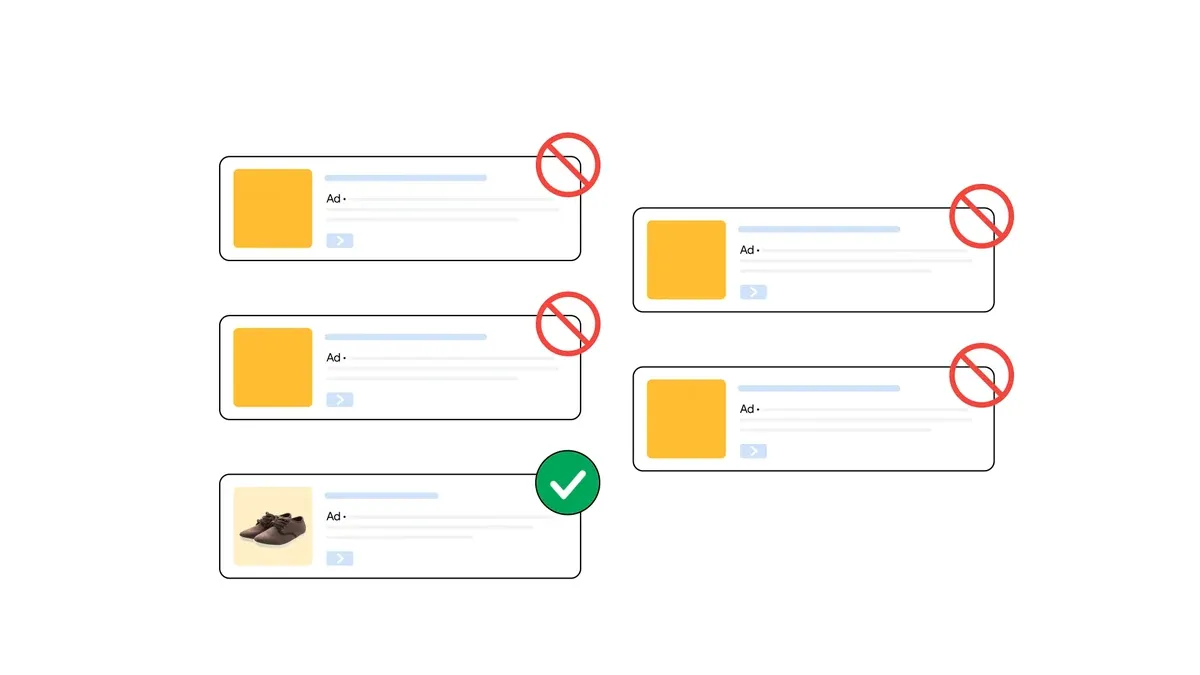
There is no published threshold. Google will never tell you how many complaints tip you over, or what share of accounts get hit. Anyone who quotes you a hard number made it up. What Google has named is the shape of the risk, not the math. New and low-trust accounts go first. Unverified identity. And two creative patterns it singles out by name.
One is ads that lean on another brand's name. The other is generic ads carrying no branding at all, the kind where a shopper genuinely cannot tell who is selling to them. Get tagged for either and Google says it may limit impressions across all of your branded and generic ads on certain searches. Not the one offending ad. The account. Across Coinis accounts running Google Search this spring, that pattern held: the warnings landed almost entirely on the freshest accounts, under sixty days old, often unverified, frequently running broad unbranded copy with no brand mark anywhere on the creative or the landing page. Finish verification, put the brand back on the ad and the page, and the warnings stopped surfacing. Boring fixes. They work.
What an e-com brand should do before 2028
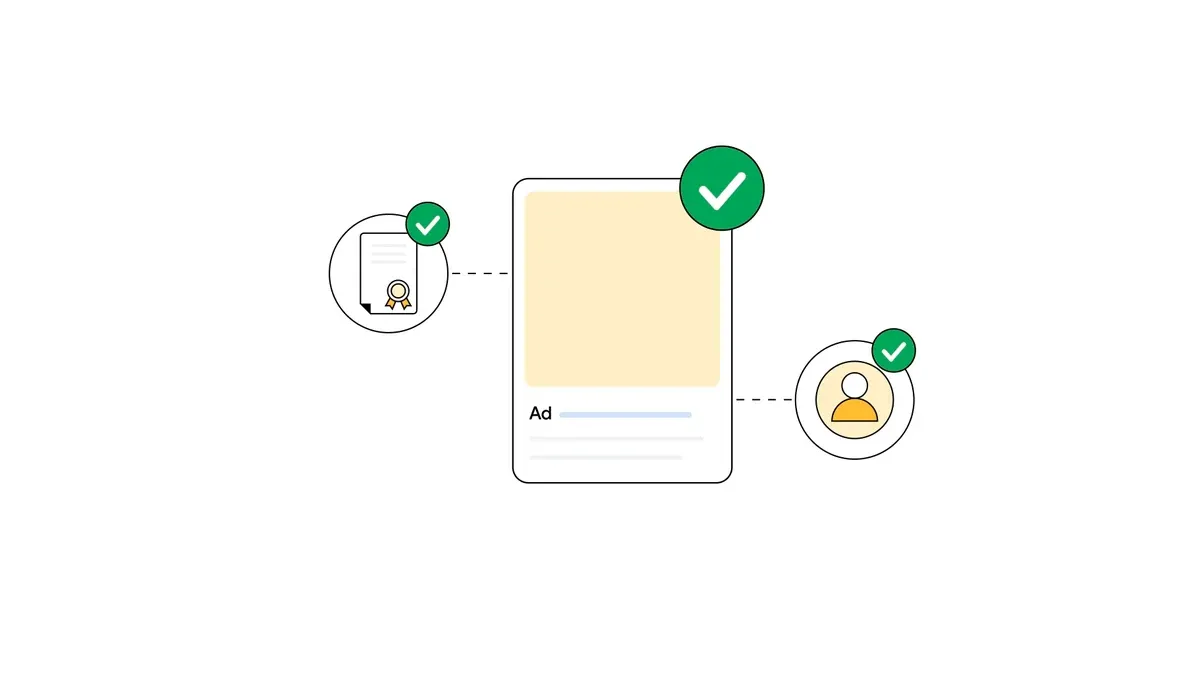
You cannot bid your way out of a trust problem, so stop treating it like a bidding one. Get advertiser identity verification done if you have not, it is the single clearest signal that you are a real business. Put your brand name and logo on the ad and on the landing page so nobody is guessing who they are buying from. Then go find why people complain in the first place, the shipping promise you miss, the trial that is hard to cancel, the support ticket that dies unanswered, because those are now an ad-delivery problem and not only a customer-service one.
If throttling does cut your reach, the instinct is to widen everything to claw the volume back. Resist it. Tighter, qualified delivery beats spraying impressions you will get penalized for, and the case for narrow targeting on Search only gets stronger here. Keep your bidding honest while you clean up the rest, a sane ROAS target beats panic-bidding into a throttle. Know which segments you actually want before you blame the auction, so spend ten minutes to define your target audience properly. And if your CPM is already climbing, fix that before reduced reach makes every remaining impression cost more.
Worth knowing how the YouTube version played out, because Search inherits the same logic. Brands that got limited there rarely got a dramatic shutdown. They got a slow bleed, fewer impressions on the queries that mattered, a CPA that drifted up for no reason the dashboard could name, and a team that spent two weeks blaming bids and creative before anyone checked the account-level notice. Search will feel the same. Quiet, gradual, easy to misdiagnose. The advertisers who recover fast are the ones who treat the notification as the first place to look, not the last.
One more thing. If a limited-serving notice does land in the account, read it instead of dismissing the pop-up like everyone did the first time. It tells you the category it flagged you under. It points at the fix. Dismissing it does not make the throttle go away, it just makes you guess.
Build trust into every ad you ship
Strip away the policy language and the throttle rewards a simple thing: advertisers who look like real businesses shipping clear, honest ads. Which is also just what makes ads work. A clear offer, a visible brand, a landing page that matches the promise on the ad. Build that in from the start and the limited-serving question mostly answers itself.
That is the default Coinis is built around. Paste your product URL and get on-brand image, video, and UGC creative that names you and sells the actual thing, launched to Google, Meta, and TikTok with the AI optimizing around the clock. Less of the generic, unbranded creative that gets accounts flagged. More of the kind Google is now quietly rewarding. Go check your notification bell first, it is worth two minutes. Then Try Coinis AI and ship ads built to clear the bar, not trip it.

Isidora Matovic
Author
Social media enthusiast and a full time researcher. She takes digital presence very seriously and that is why you are always in touch in what is going on with us! Follow us for more posts like this.