
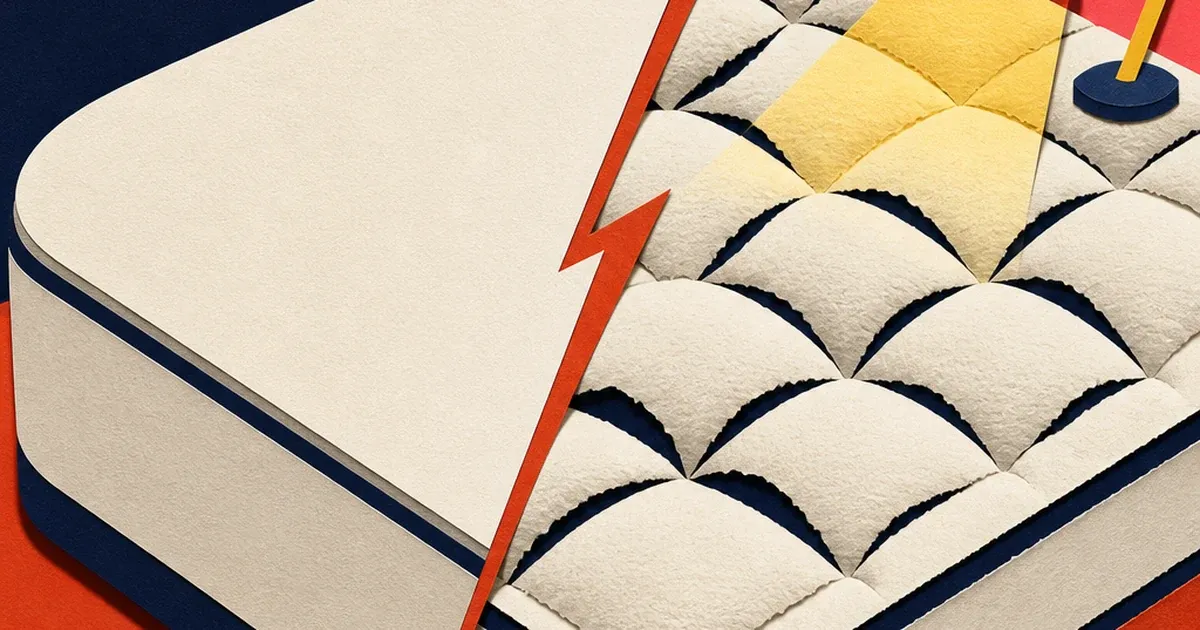
You shot the mattress straight on, dead-center, with a soft even light bouncing off the whole surface. The exposure is perfect. The white is clean. And the quilting, the actual reason this mattress costs more than the one next to it, barely shows. The channels and tufting marks are there in real life. In the photo they read as a flat gray rectangle.
That is not a bad camera or a bad mattress. It is a lighting-angle problem that hits quilted and tufted surfaces specifically, and it is fixable without a reshoot.
Why flat light erases texture that is genuinely there
A camera does not record texture directly. It records shadow. Quilting, channel stitching, and tufting are all shallow relief, ridges and valleys a few millimeters deep, and the only way a lens captures that relief is if light hits it at an angle low enough to cast a visible micro-shadow in each valley. Light coming from straight on, or from directly above the lens axis, fills every valley evenly and leaves nothing for the camera to see (PhotographyTalk, "Texture Photography: How to Make Texture Your Primary Subject," 2026).
This is well documented in product photography specifically for mattresses and bedding. One mattress-industry marketing guide puts it plainly: the quilt can look premium in one lighting setup and lumpy or lifeless in another, and a dark mattress in particular can absorb light and lose its surface detail entirely under the wrong setup (Bedhead Marketing, "Photography of Furniture: A Mattress Industry Guide," 2026). An ecommerce flat-lay photography guide names the fix directly: side lighting, sometimes called raking or grazing light, reveals fabric texture through soft micro-shadows, while light aimed straight down the camera's axis does the opposite (Orbitvu, "A Complete Guide to Flat Lay Fashion Photography in 2026"). A separate furniture-photography guide for wholesalers gives the same instruction in different words: position the light at roughly a 45-degree angle to the surface, because side lighting is what creates the shadows that reveal weave and texture in the first place (WizCommerce, "Furniture Photography Guide for Wholesalers (2026)").
Studio shoots default to flat, even lighting for a reason. It is the safest setup for avoiding harsh shadows and keeping colors accurate across a whole catalog. The tradeoff nobody flags until the photos are already live: that same safe lighting is the one setup that makes a quilted or tufted surface look like a plain one.
The fix: light the texture back in, without reshooting
Reshooting every SKU at a 45-degree raking angle is the textbook answer, and it is also slow, expensive, and often impossible once a product has already shipped to a fulfillment center or a showroom photo is the only asset on file. The practical fix works on the photo that already exists.
Step 1: Mask only the quilted or tufted surface. The texture loss is confined to the top panel of the mattress or the face of the bedding, not the sidewall, the handles, or the sheet underneath. A mask drawn tightly around that one surface keeps the correction from drifting into parts of the photo that are already reading fine.
Step 2: Run a targeted repair through enhance_asset_proxy (recraft-inpaint). The prompt describes the end state only: the same quilting pattern with visible depth and shadow definition in the channels, same stitching layout, same fabric color. Nothing in the prompt names a specific new light direction or a specific shadow shape. Describing the technical cause instead of the desired result is a confirmed way to get a model to invent a lighting setup that does not match the rest of the photo.
Step 3: Fan it out with generate_image_templates. Once the corrected photo shows real surface depth, the same shot becomes every ad format a campaign needs from one source image: square for Meta feed, vertical for Stories and TikTok, landscape for Google Display and YouTube. One photo with the texture restored becomes a full multi-channel launch kit instead of a single flat-looking static image.
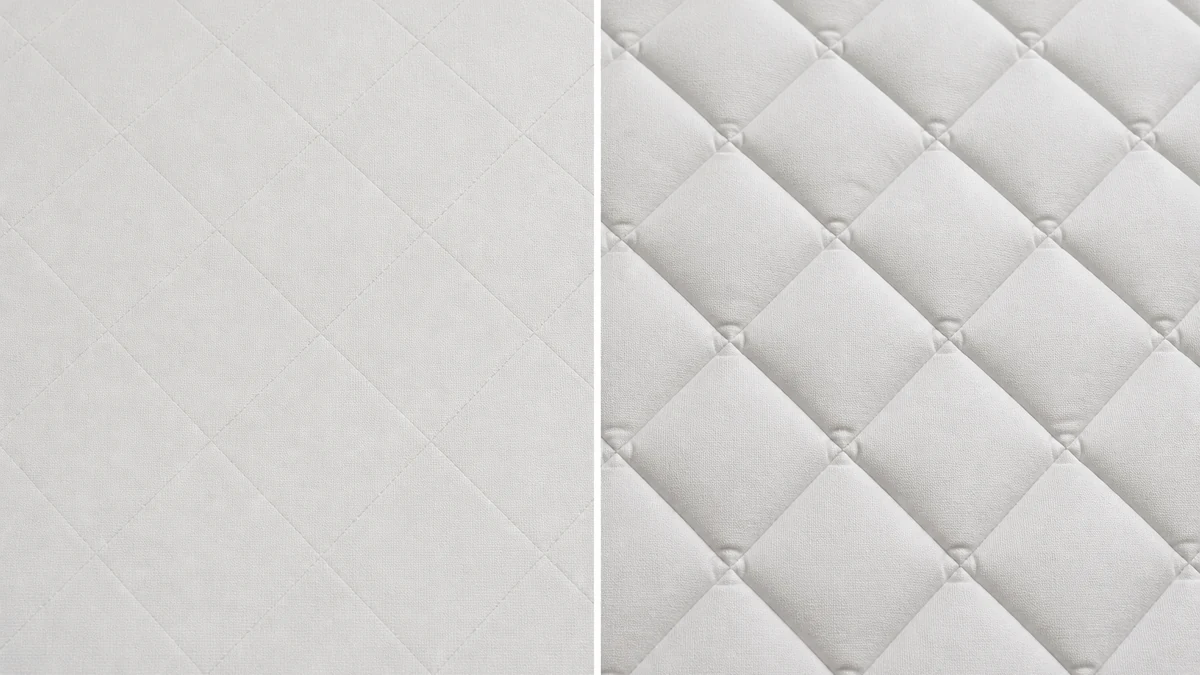
mcp.coinis.dev (the connection that runs enhance_asset_proxy) was offline when this article was produced. The image above is an illustrative still generated directly, not a live enhance_asset_proxy render. See a real enhance_asset_proxy correction in action on a bakery display-case photo.
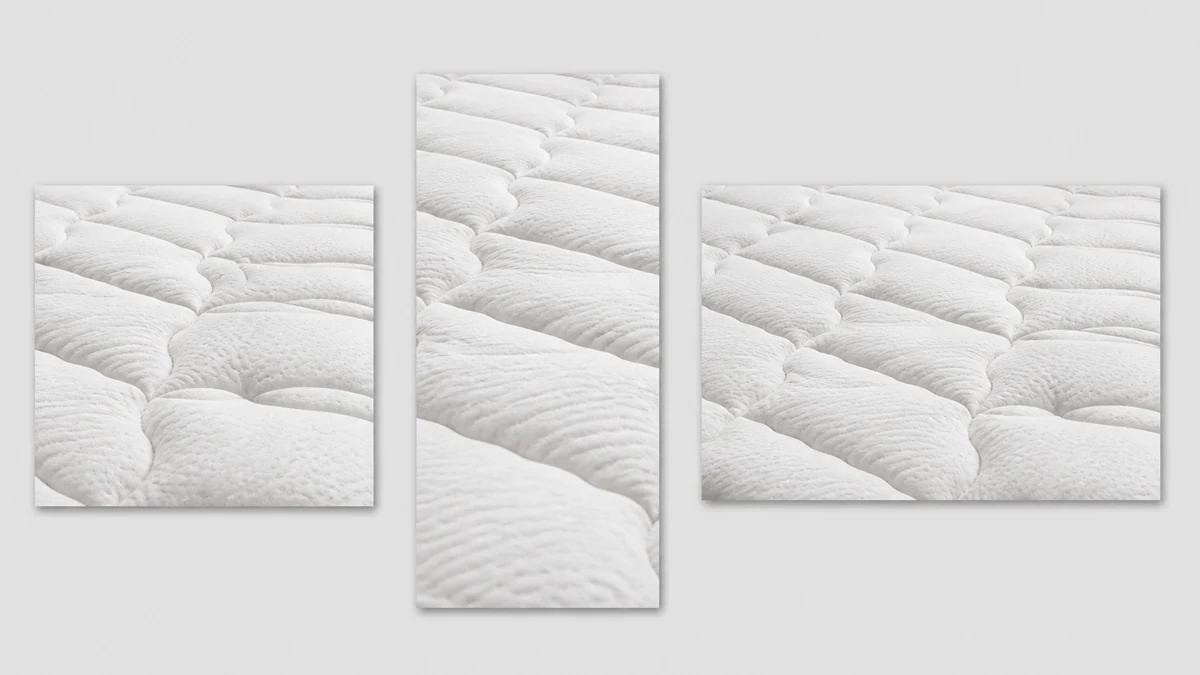
Same outage note applies here: this fan-out mockup is an illustrative still, not a live generate_image_templates render. See a real generate_image_templates fan-out for the actual tool in action.
Why this matters for mattress and bedding brands specifically
Mattresses and premium bedding sell almost entirely on a texture and quality story that a flat gray rectangle cannot tell. A shopper scrolling a feed ad cannot lie down on the product or run a hand across the quilting. The photo is the only evidence of the thing the price tag is paying for, and a photo that flattens the quilting into a plain surface undercuts the exact detail the brand is trying to sell against a cheaper, thinner-looking competitor.
The category carries real advertising spend behind that texture story. Bed and mattress retailing is a $28.4 billion industry in the US in 2026 (IBISWorld, "Bed & Mattress Retailing in the US Industry Analysis, 2026"), and mattress manufacturing alone adds another $9.3 billion on top of that (IBISWorld, "Mattress Manufacturing in the US Industry Analysis, 2026"). That is a crowded field of brands running near-identical product-photo-plus-discount-badge ads, which is exactly the generic pattern one mattress-marketing review calls out as the thing that fails to explain why one bed costs more than the one next to it (Bedhead Marketing, "The 10 Best Social Media Ads for Mattress Brands (2026)"). A photo that actually shows the quilting depth is a small, fixable edge in a category where most ad creative looks the same.
The same mechanism applies beyond mattresses. Any quilted comforter, tufted headboard, channel-stitched throw pillow, or matelassé bedspread photographed under flat studio light loses the same surface detail for the same reason, whether the ad is selling the mattress itself or the bedding layered on top of it.
What to do now
If you run ads for a mattress brand, a bedding line, or a furniture retailer selling quilted or tufted pieces, pull your current catalog photos and look specifically at the texture, not the color or the crop. A flat gray surface where there should be visible channel-stitch depth is an easy thing to miss glancing at a thumbnail and an easy thing for a shopper to notice next to a competitor's photo that shows real dimension. Any photo with that problem is one correction pass away from being usable, and once the texture is back, that same photo turns into a full set of launch-ready ad formats in one pass through Coinis Ad Studio instead of a reshoot or a manual edit per channel. One corrected photo in, a full ad kit out.
FAQ
Is flat-looking quilting a sign the photo was shot wrong? Not a mistake exactly, more a tradeoff. Flat, even lighting is the safest default for avoiding harsh shadows and keeping color accurate across a catalog, but that same evenness is what erases the shadow detail texture depends on.
Will every quilted or tufted product photograph this way? Not identically. The amount of texture lost depends on how deep the quilting channels or tufting are, how close to straight-on the light is positioned, and how dark the fabric is. A lighter fabric under slightly angled light will show more texture than a dark fabric shot dead flat.
Does correcting this count as misrepresenting the product? No. The correction restores shadow depth in the quilting pattern that exists on the real product, it does not add stitching, change the pattern, or alter the fabric color. The quilting in the corrected photo is the quilting on the actual mattress or bedding piece.
Why not just reshoot at a better angle? Reshooting is the ideal long-term fix for new photography, but it is not practical for an existing catalog, a product that has already shipped to a warehouse, or a showroom shot that is the only asset on file. The photo correction works on what already exists.
What ad formats should I generate from the corrected photo? At minimum, a square crop for Meta and Instagram feed, a vertical 9:16 for Stories and Reels, and a landscape crop for Google Display and YouTube. Building all three from the same corrected source keeps the creative consistent across every channel a mattress or bedding campaign runs on.
Sources
- PhotographyTalk, "Texture Photography: How to Make Texture Your Primary Subject," raking light and micro-shadow mechanism. https://www.photographytalk.com/texture-photography-how-to-make-texture-your-primary-subject/
- Bedhead Marketing, "Photography of Furniture: A Mattress Industry Guide," quilt/tuft lighting variability, dark-mattress light absorption. https://www.bedheadmarketing.com/post/photography-of-furniture
- Orbitvu, "A Complete Guide to Flat Lay Fashion Photography in 2026," side/raking light reveals fabric texture. https://orbitvu.com/blog/a-complete-guide-to-flat-lay-fashion-photography-in-2026
- WizCommerce, "Furniture Photography Guide for Wholesalers (2026)," 45-degree angled light for texture/weave. https://wizcommerce.com/blog/furniture-product-photography-guide
- IBISWorld, "Bed & Mattress Retailing in the US Industry Analysis, 2026," $28.4bn market size. https://www.ibisworld.com/united-states/industry/bed-mattress-retailing/5462/
- IBISWorld, "Mattress Manufacturing in the US Industry Analysis, 2026," $9.3bn market size. https://www.ibisworld.com/united-states/market-size/mattress-manufacturing/876/
- Bedhead Marketing, "The 10 Best Social Media Ads for Mattress Brands (2026)," generic-ad-creative problem in the category. https://www.bedheadmarketing.com/post/best-social-media-ads

Isidora Matovic
Author
Social media enthusiast and a full time researcher. She takes digital presence very seriously and that is why you are always in touch in what is going on with us! Follow us for more posts like this.