
Most of the presets in this mini-series sell a product by being convincing: a clean comparison, a cited statistic, a believable photo dump. The meme preset sells a product by being funny. Ad Studio's generate_image_preset_agent tool ships a meme preset that takes a real product photo and builds an original, meme-style ad image around it, the visual grammar of internet humor applied to an actual product rather than a borrowed template.
Why a joke is a legitimate ad format, not a gimmick
Meme marketing has a longer and more measured track record than its casual reputation suggests. A widely cited 2018 Forbes Communications Council case study reported that a health care marketer's meme-based email and social content pulled in roughly ten times the reach of standard marketing graphics, 60% organic engagement against a typical 5%, and a 14% click-through rate against a 6% industry average for the same channel. That single company case has since been echoed by peer-reviewed academic work. A 2024 study in the Journal of Retailing and Consumer Services (Razzaq, Shao, and Quach) ran three separate experiments and found that meme marketing which keeps the brand visibly present in the joke produces measurably better attitude-toward-ad and consumer-engagement scores than meme marketing that hides the brand, especially among consumers with lower prior brand knowledge. A 2026 study in the International Journal of Hospitality Management (Ou, Wong, and Lian) found the same mechanism holds in foodservice specifically: meme marketing cues increase consumer engagement, mediated by a sense of "brand fun," and the effect strengthens when the audience already has a high level of meme literacy.
None of that is a claim that every joke works. It is evidence that a well-executed meme, one the audience actually gets, with the brand visibly and naturally present, is a documented, repeatable engagement lever, not just a one-off viral accident.
What the meme preset actually builds
The preset takes a real product photo and generates a brand-new meme-style composite around it: the product placed into a recognizable meme visual structure, bold caption text in the familiar impact-font style, built from scratch rather than lifted from an existing meme image or character. That distinction matters for two separate reasons. First, honestly: a borrowed meme template (a specific, recognizable photo or character someone else created) carries its own copyright and attribution questions that an originally generated image does not. Second, practically: a stale, overused template reads as lazy, while fresh meme-style humor built around the actual product reads as a brand that's in on the joke rather than riding someone else's format.
This preset sits apart from every other persuasion mechanism demonstrated so far in this series. The ugly ad preset and the photo dump preset both borrow credibility from looking unpolished or unstaged. The meme preset borrows attention from being funny, a completely different trigger, closer to the humor-driven engagement lift the hospitality meme-marketing study measured than to either of those two authenticity-driven formats.
The one rule that makes or breaks a brand meme
The academic literature above converges on a specific, actionable finding: brand-prominent memes that keep the product visibly and naturally in the joke outperform brand-subtle memes that hide it, and the effect is strongest with audiences who don't already know the brand well. That has a direct, practical consequence for how to brief this preset. Don't hide the product in a generic joke and hope the punchline carries it. The product itself, or the exact problem it solves, needs to be the setup or the payoff of the joke, not a logo pasted into an unrelated meme format.
The second rule is simpler and non-negotiable: the joke has to actually be relatable to the product's real audience. A meme that requires explaining the reference defeats the entire mechanism, the format works because recognition is instant, not because the caption is clever in isolation.
Worked example: a product-specific punchline, not a borrowed template
Start with a product that has one clear, relatable pain point worth joking about, something the target audience will recognize immediately without context. The brief for the preset:
Preset: meme
Product: [product photo URL or productId]
Joke setup: a familiar, relatable frustration the product's target audience actually experiences
Caption style: bold, impact-style meme font, short and punchy, two-part setup/punchline structure
Brand presence: the product stays visibly and recognizably in frame as the punchline or the fix, never hidden behind the joke
Avoid: any existing copyrighted meme template or character, any political or offensive reference, any invented product claim, garbled or illegible caption text
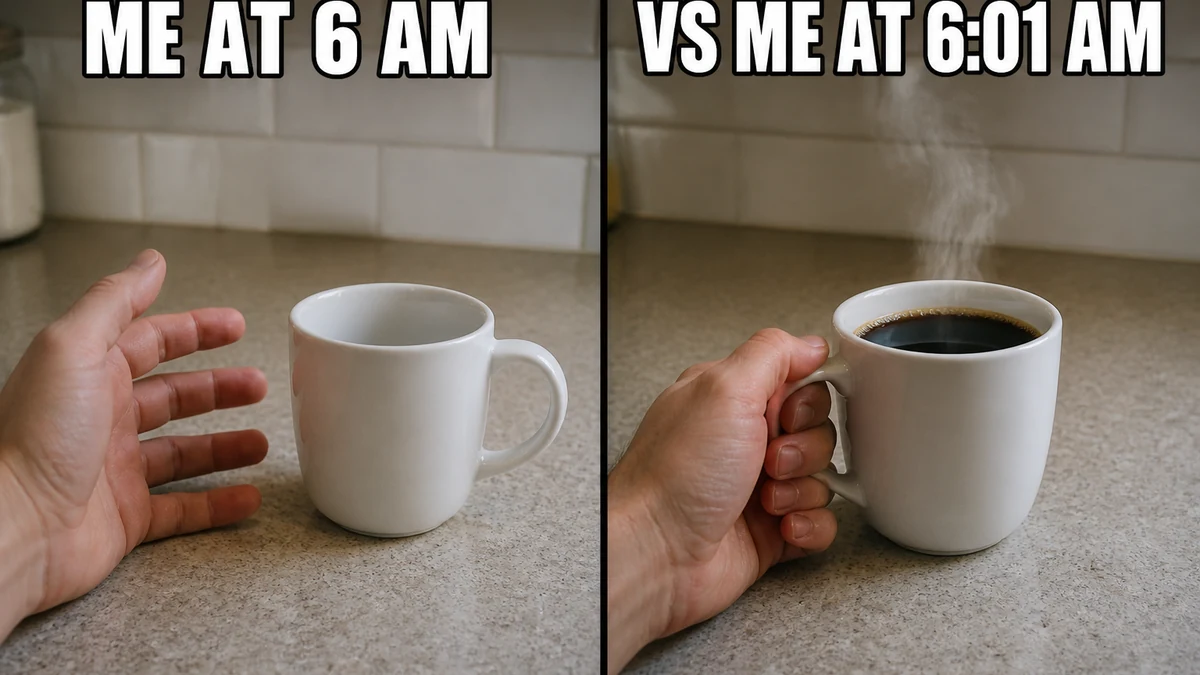
mcp.coinis.dev is confirmed down as of this publish (ongoing outage since 2026-11-24), so the image above is an illustrative substitute generated directly via OpenAI, not a live generate_image_preset_agent render. It follows the same two-part meme structure, legible caption text, and visible product this preset is built to produce. For a real generate_image_preset_agent render from this same mini-series, see the offer promo preset article. The live meme-preset render will replace this substitute in a future update once the tool connection recovers.
FAQ
Does this risk copyright trouble by using an existing meme template? No, if briefed correctly. The preset generates an original image from scratch, it does not insert the product into an existing copyrighted meme photo or character. Never prompt it to recreate a specific named meme image.
Will this work for a serious or regulated industry? Humor-based advertising carries more brand-voice risk than most formats in this mini-series, it's a fit for brands with a genuinely playful voice, and a weaker fit for anything where a joke could read as dismissive of a real customer problem (health, finance, and similar regulated or sensitive categories should weigh this format carefully, on a case-by-case basis, before using it).
How is this different from the ugly ad preset? The ugly ad preset deliberately flattens polish so the image reads as native, unedited content. The meme preset keeps a clear, deliberate joke structure, intentional humor is the whole point, not an accident of crude production values.
What makes a brand meme fail? Per the cited research, hiding the brand inside the joke rather than keeping the product visibly present, and picking a reference the target audience doesn't immediately recognize. Both failure modes are avoidable at the brief stage, not a limitation of the tool.
Can the preset write the caption text itself? Yes, but a specific, literal joke setup in the brief produces a much more on-target result than a vague instruction like "make something funny." The more specific the real pain point named in the brief, the more relatable and accurate the output.
Try it on Coinis
Pull a real product photo, name the one frustration your audience will instantly recognize, and let the meme preset build an original, on-brand joke around it, no borrowed template, no stock meme generator. Ad Studio builds the whole thing in one generation.
Start building launch creative on Coinis
Sources
- Tama-Rutigliano, Karina, "Memes: A Digital Marketing Tool For Every Industry," Forbes Communications Council, August 10, 2018: https://www.forbes.com/sites/forbescommunicationscouncil/2018/08/10/memes-a-digital-marketing-tool-for-every-industry/
- Razzaq, Ali, Shao, Wei, and Quach, Sara, "Meme marketing effectiveness: A moderated-mediation model," Journal of Retailing and Consumer Services, vol. 78, 2024: https://doi.org/10.1016/j.jretconser.2023.103702
- Ou, Chuchu Estella, Wong, IpKin Anthony, and Lian, Qi Lilith, "Understanding the effectiveness of meme marketing in foodservice: The roles of language style and meme literacy," International Journal of Hospitality Management, vol. 135, 2026: https://doi.org/10.1016/j.ijhm.2026.104641

Isidora Matovic
Author
Social media enthusiast and a full time researcher. She takes digital presence very seriously and that is why you are always in touch in what is going on with us! Follow us for more posts like this.