

Seen your Meta (Facebook/Instagram) ad performance nosedive lately? You’re not alone. Many media buyers are currently struggling with declining ROAS and unstable CPAs, leading to massive confusion over Broad vs. Interest targeting. The old playbook obsessing over interests and killing ads the second the CPA spikes, isn’t just outdated; it’s actually sabotaging your results.
Meta just pulled back the curtain on their new AI architecture, and it’s a total shift in how the machine thinks. We’ve moved into the era of Andromeda, Lattice, and GEM. Here is what is actually happening under the hood and how you need to pivot to stay profitable.
TL;DR for Busy Media Buyers
- Andromeda: A filter that kills “noisy” ad variants. Focus on big creative swings, not button colors.
- Lattice: A global data web. Broad targeting wins because Meta learns from your competitors’ data too.
- Sequential Learning: High CPA ads are often “warm-up” ads. If you kill them, your “winners” will die next.
- GEM: The AI “sees” your video. Creative elements (accents, backgrounds) are the new targeting checkboxes.
- The Blueprint: 1 CBO campaign, persona-based ad sets, and 5+ radically different creative formats per set.
Meta Ads ROAS is Tanking Because of the Andromeda Filter
Most people think Andromeda is the “whole” algorithm. It’s not. It’s a massive, high-speed filter. Because Meta’s “Creative Plus” can now generate thousands of variations of your ad (tweaking lighting, music, and text), the system needed a way to kill the “noise” before it even reached the auction.
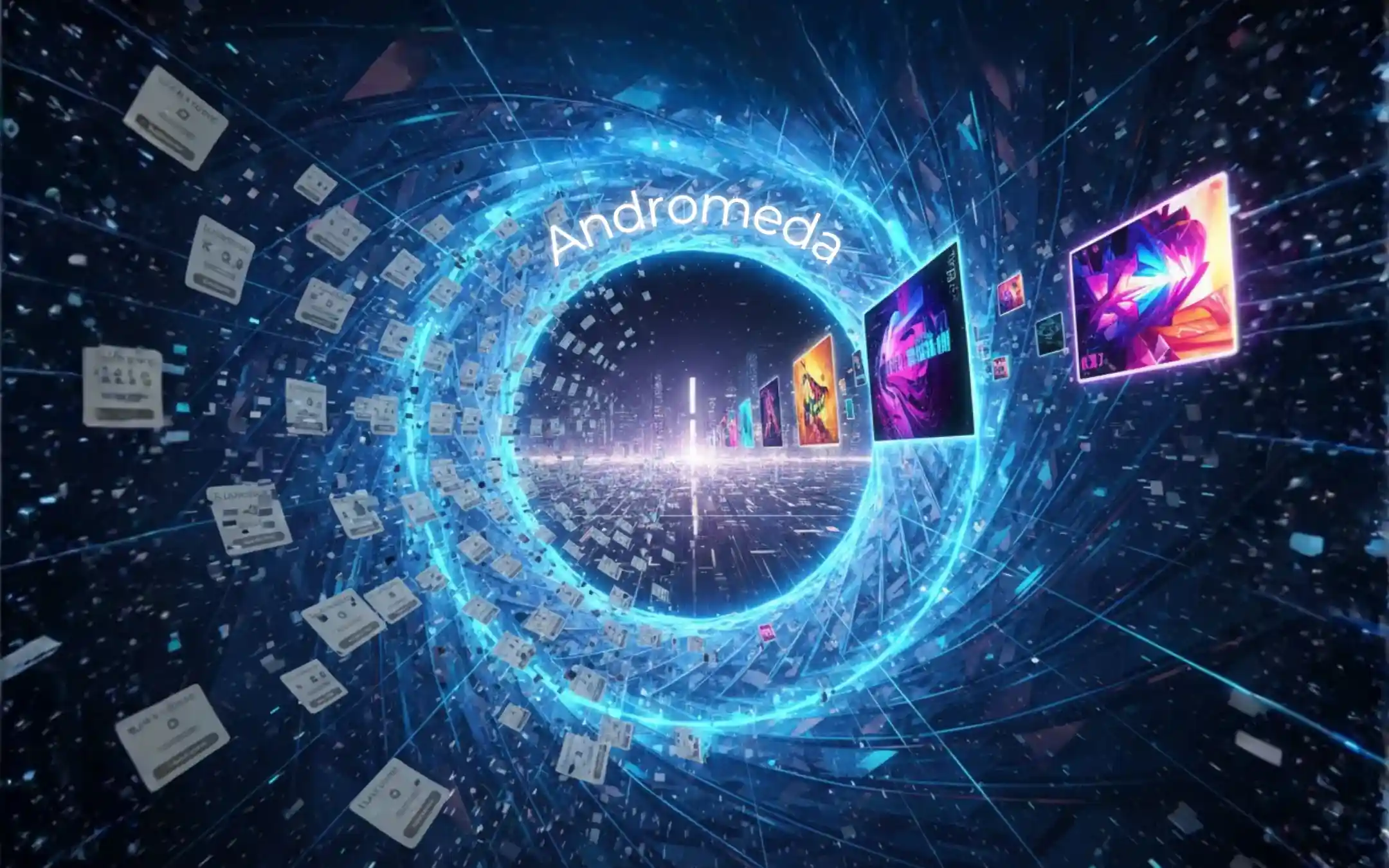
Don’t waste your time split-testing minor button colors. Andromeda handles the micro-tweaks. Your job is to give the machine big, bold, and distinct creative concepts. If your ads look too similar, the filter will bundle them together and you’ll never get the reach you need.
How the Lattice System Makes Broad Targeting Outperform Interests
Meta’s new Lattice system is basically a giant, interconnected web. Every data point in the ecosystem is now touching every other point.
This means that when your competitor runs a successful campaign, the “learnings” from that campaign actually help your ad account find the right buyers faster. This is why “Broad” targeting is winning. You’re not just using your own data anymore; you’re tapping into a global lattice of intent.
Killing High CPA Ads is Actually Destroying Your Best Performers
This is the one that hurts the most to hear: Stop killing your “expensive” ads.
Meta now operates on Sequential Learning. The AI understands that a customer rarely buys a new product the first time they see it. They often need an “Introduction” before they are ready for the “Pitch.” When you judge every ad by a single ROAS number, you miss the hidden relationship between your creatives.
The “Supplement” Scenario
Imagine you are running a campaign for a new brain supplement. You have two main ads, let’s call them the hook and the closer.
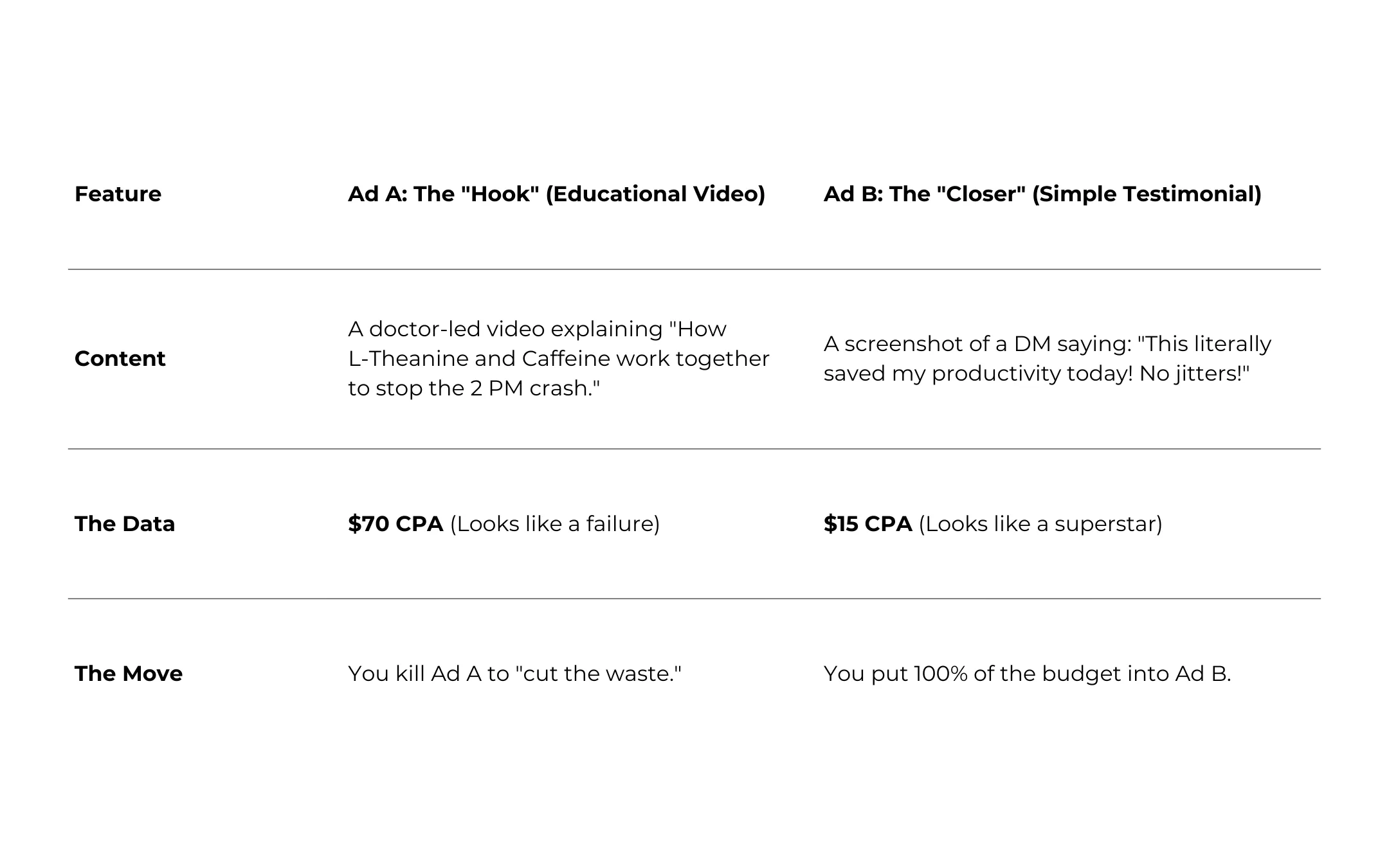
- The introduction ad, let’s call it “the Hook” ($70 CPA): A doctor-led video explaining the science of “brain fog.” It’s long, educational, and expensive to run.
- The pitch ad, we’ll call it “the Closer” ($15 CPA): A simple image of the bottle with a “Buy 1 Get 1 Free” offer. It has a massive ROAS.
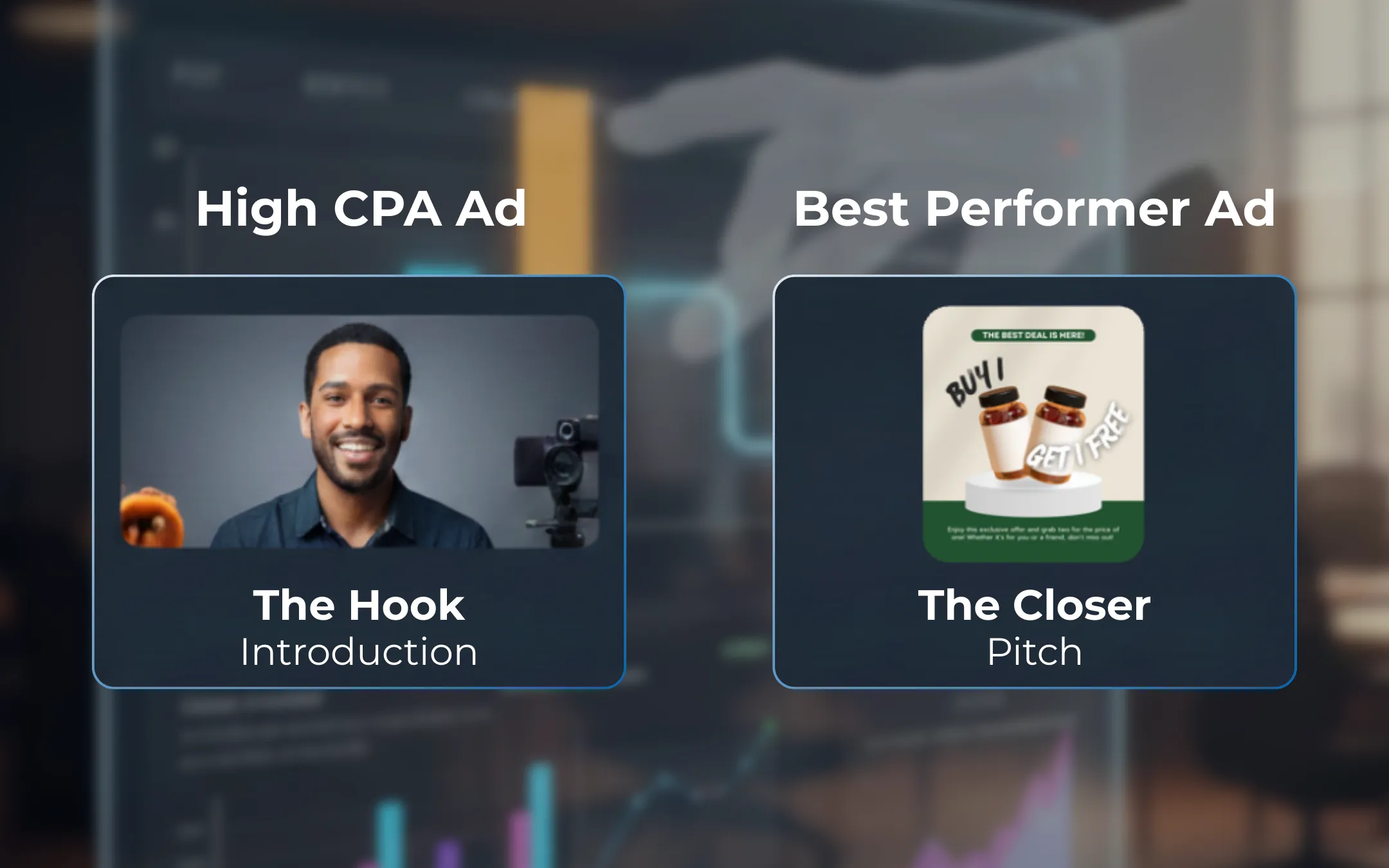
The Trap: Most advertisers see that $70 CPA and kill the video immediately to “save budget.”
The Reality: The $15 “Closer” was only working because the $70 “Hook” did the heavy lifting of building trust and authority. Without the doctor explaining why the product works, the “Buy 1 Get 1” offer looks like spam to a cold audience.
Within days of killing your “expensive” “Hook”, you’ll watch your “cheap” “Closer”’s CPA skyrocket. Meta spends money on specific ads for a reason—they are warming up the audience. Trust the allocation, not just the individual ROAS.
Creative IS the New Targeting (GEM)
With the GEM model, Meta isn’t just looking at clicks. It’s “watching” your videos. It scans the background, listens to the accents, and reads the text on screen to figure out who the ad is for. If you want to reach tech founders, don’t look for a checkbox in settings; put a mechanical keyboard and three monitors in your video. GEM will find your people.
The “Creative Starter Pack” for 2026
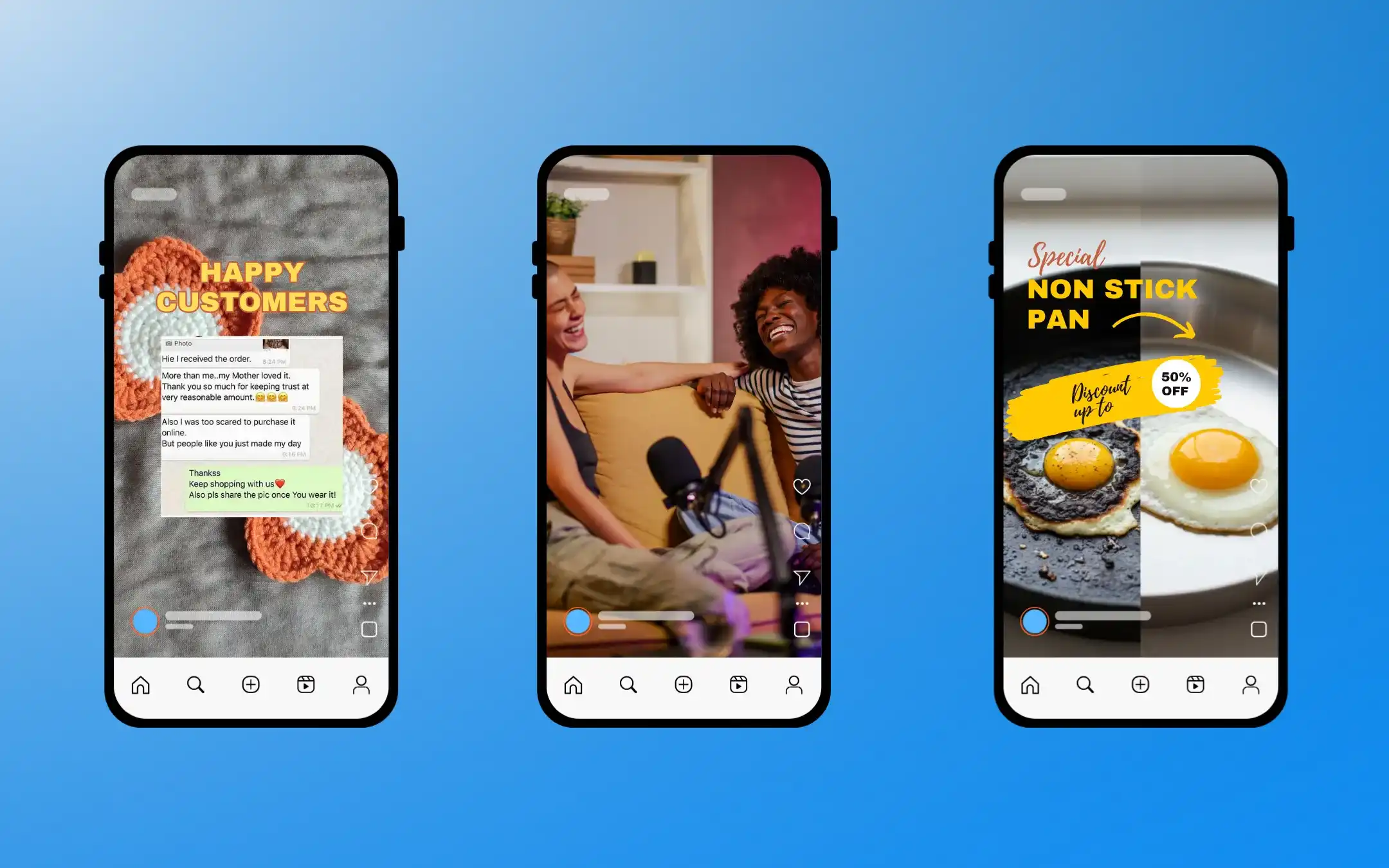
To feed this new AI, you need Creative Diversity. Here are five specific examples of what you should have running inside a single ad set right now:
- The “Raw Podcast” Clip: A 9:16 video of two people talking with pro mics. GEM recognizes the “authority” vibe and serves it to people who consume educational content.
- The “Chaotic Comparison”: A split-screen showing the “Old Way” (messy/slow) vs. “Your Way” (clean/fast). This is a perfect “closer” for Sequential Learning.
- The “Aesthetic UGC”: A lo-fi, phone-filmed video of someone using the product in a real kitchen or office. It feels like native social content, not a pitch.
- The “Screenshot Proof”: A simple image of a Twitter thread or a WhatsApp message from a happy client. It’s a thumb-stopper because humans are hardwired to read “leaked” messages.
- The “Founder’s Why”: A selfie-style video where you explain the problem that led you to start the business. This is the “engine” that builds long-term trust.
Building a Consolidated Account Structure That Feeds the AI
If you want to scale in 2026, you have to let go of the steering wheel:
- One CBO Campaign: Stop splitting your budget into twenty pieces.
- Persona Ad Sets: Group ads by the problem you’re solving, not by demographics.
- Consolidate: Put all 5 creative formats above into the same ad set. Let Lattice figure out who needs to see the Podcast clip and who needs the Screenshot.
Scaling with Confidence
Look, scaling these 2026-style campaigns isn’t just a technical challenge, it’s a psychological one. It requires a “set it and forget it” level of trust that frankly feels a bit unnatural. You’re not just putting your faith in the AI’s black box; you’re betting the farm on the literal accounts you’re firing from.
And let’s be real: there is nothing, and I mean nothing more soul-crushing than that moment of “click.” You finally hit that beautiful, elusive sweet spot in the algorithm where the numbers start singing, and then? Disaster. Maybe the account gets throttled for some invisible reason, or a payment method glitches out at 3:00 AM.
It’s a nightmare.
If you’re ready to stop playing “amateur” media buying and start pushing serious volume, you need a setup that doesn’t freak out and break the second things actually start getting exciting. This is why the top players in the game are moving their operations to AdForce by Coinis. It’s enterprise-grade infrastructure built for Meta advertisers who need stability. Basically, we handle the technical “prunework” and provide verified accounts, so you can stay focused on the only thing that matters in 2026 – Creative Strategy. Besides this AdForce offers you 24/7 support where you will get fresh advice on how to target your audience properly on Meta and get results that are worth your time.
In the meantime you can learn more about some updates about Meta advertising here.
The AI is doing the heavy lifting now. Your job is to feed the machine, keep your setup stable, and get out of the way.

Isidora Matovic
Author
Social media enthusiast and a full time researcher. She takes digital presence very seriously and that is why you are always in touch in what is going on with us! Follow us for more posts like this.