

Meta recently, silently, rolled out one of the most practical updates to the Ads Library in years: you can now filter ads by impressions. On the surface, this sounds small. In reality, it fundamentally changes how performance marketers research competitors, identify winning formats, and validate creative direction.
For e-commerce brands, media buyers, and dropshippers, this update removes a major layer of guesswork from creative research.Let’s break down why it matters and how to use it properly.
What the Impressions Filter Actually Reveals
The Meta Ads Library has always allowed you to search for active ads by brand or keyword. But until now, you had no clear way to know which ads were receiving serious budget allocation.
With the new update, you can sort ads by impression volume.
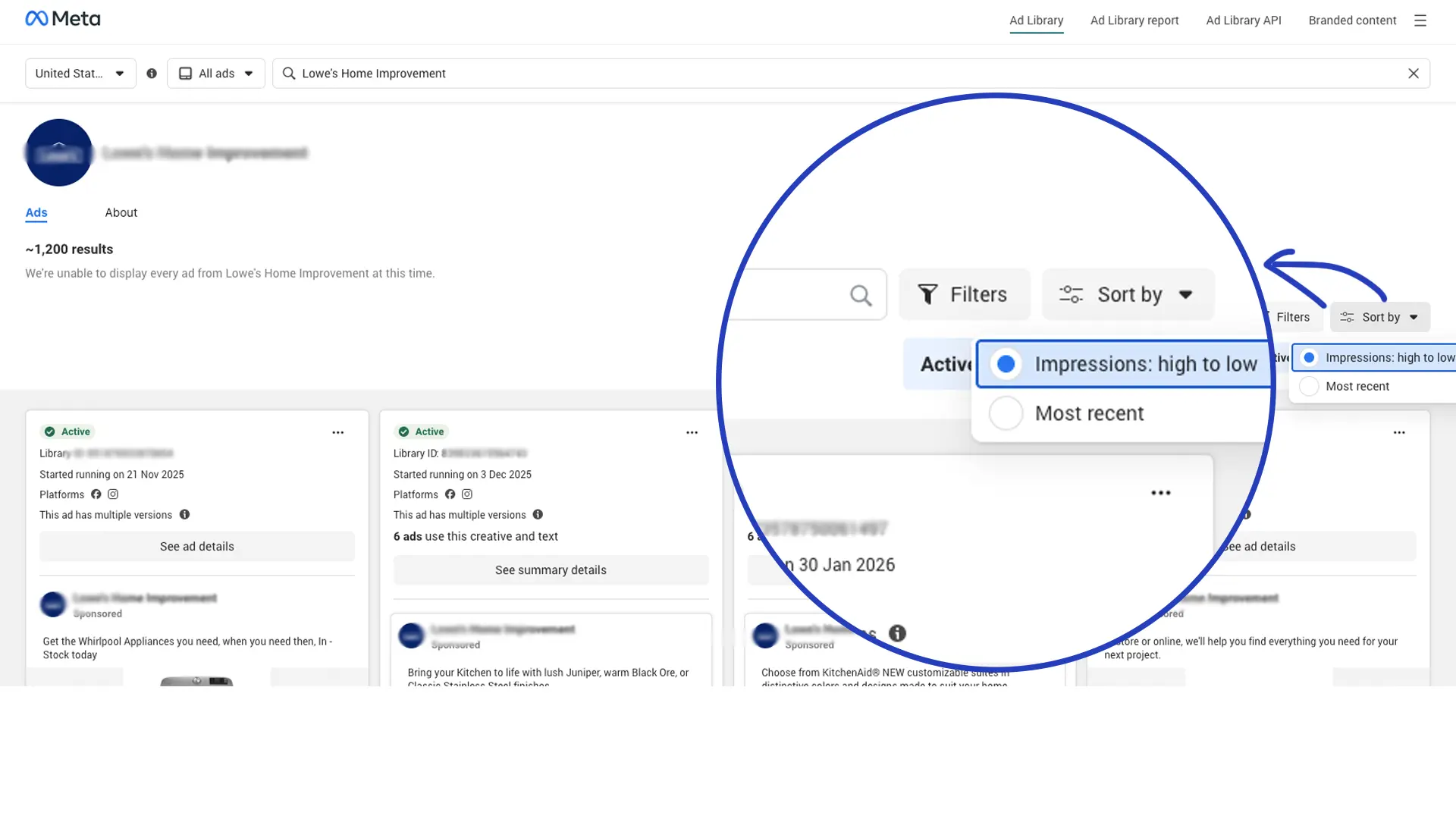
That matters because impressions are closely tied to spend. An ad accumulating high impression numbers is likely being supported with more budget. And advertisers rarely scale creatives that don’t perform.
In other words, the impressions filter shows you where the money is flowing. It does not guarantee profitability. But it surfaces intent. If a brand continues funding a creative at scale, it’s usually because that ad has passed internal performance benchmarks. That signal is powerful.
Why This Changes Competitor Research
Before this update, competitor analysis in the Ads Library was not entirely inefficient, but it could be improved, right? You could see ads, but you couldn’t prioritize them. You had to scroll through dozens of creatives without knowing which were actively being scaled.
Now, research becomes structured. Instead of asking, “Which of these ads works?” you ask, “Which of these ads is getting funded?”
High-impression ads are more likely to be:
- Proven against performance metrics
- Backed by confident budget decisions
- Tested and validated internally
For marketers running Meta campaigns, this means research time drops significantly. You can focus your analysis on a smaller subset of likely winners rather than guessing.
Don’t be a Copycat
The biggest mistake marketers will make with this update is copying ads directly. The correct approach is structural analysis. When reviewing top-impression ads, focus on patterns:
- What is happening in the first three seconds?
- Is the hook problem-driven, benefit-driven, or testimonial-based?
- Is the format raw UGC or polished brand footage?
- Is the offer direct and aggressive, or subtle and trust-based
- Where is the call-to-action placed? Early? Late? Repeated?
You are not copying creative. You are identifying frameworks. The value of this update is not replication. It is pattern recognition.
How to Use This Update Today
If you run Meta ads, here is a practical approach:
- Search three direct competitors.
- Filter by impressions.
- Document the top five ads per brand.
- Identify shared hook styles and formats.
- Create structured variations inspired by patterns.
- Launch controlled tests within seven days.
Research should move quickly into execution. That is where the advantage lies.
Want to learn more about how Meta operates and how you can scale fast? We have an ad infrastructure which is going to help you with better performance without restrictions and delays. Credit line is available as option. Book a free consultation with our team.

Tamara Jelic
Author
Part-time researcher, part-time marketing enthusiast. Wanted to be a teacher, ended up working for the best ad tech company in Eastern Europe.