
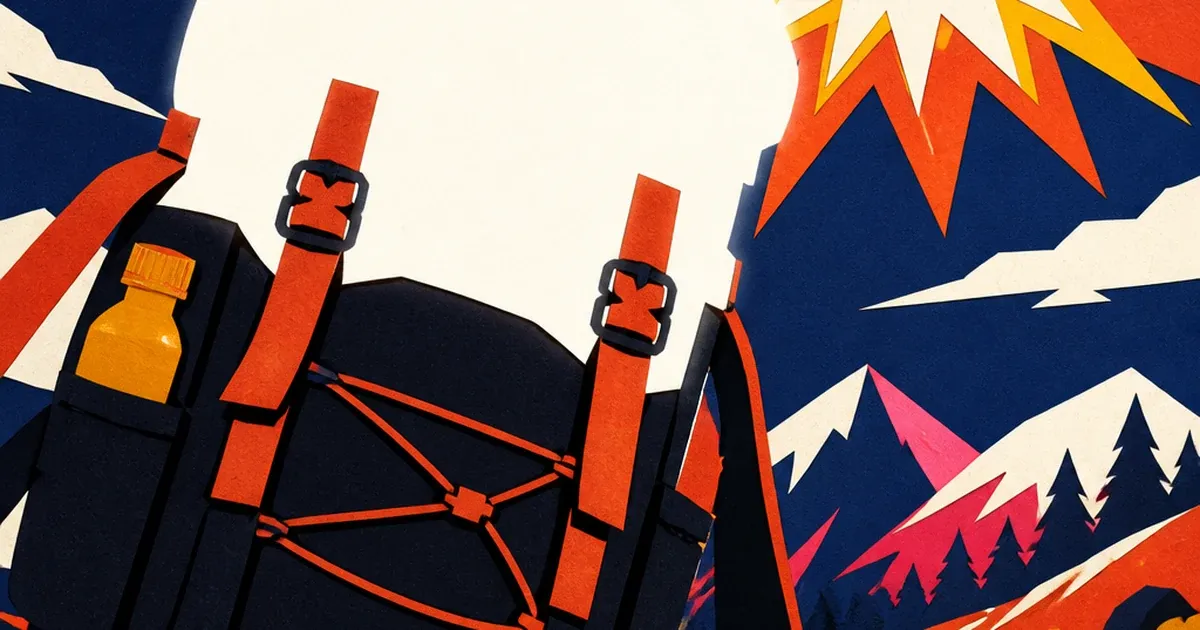
A camping or outdoor gear brand shoots product photos outside because that is where the gear actually lives: a tent pitched in a clearing, a backpack on a trailhead, a cooler on a tailgate at noon. It is also the worst possible light for a camera sensor. Direct midday sun blows the highlights off anything light-colored or reflective, tent fabric, aluminum poles, a cooler lid, while the straps, pockets, and shaded folds right next to that same bright surface drop into solid black with zero detail. The photo that looked fine on a phone screen in the field turns out to have lost the stitching detail, the fabric texture, and half the color information a buyer needs before checkout.
Nobody plans this. It is what direct sun does to a camera sensor's dynamic range whether the shooter is a gear brand's own marketing team or a field rep grabbing a quick shot between hikes. A tent brand photographing a rainfly against a bright sky, a backpack company shooting a pack on a sunlit ridge, a cookware brand capturing a stove at a noon campsite: all three lose the same detail to the same cause, and all three end up shipping that photo into whatever ad size comes next.
Outdoor is a real ad category, and a flat-looking photo undersells the gear it's selling
Outdoor retail is not a niche. The Outdoor Industry Association's 2025 Outdoor Retail Sales Trends Report, built with Circana, put total US outdoor market retail sales at $28 billion in 2024, up 1% from 2023, with footwear and accessories posting the strongest gains of any category (Outdoor Industry Association, "2025 Outdoor Retail Sales Trends Report," 2025). That growth spans camping and outdoor recreation brands alike, and it is a category where a shopper is deciding, on a phone screen, whether a tent's rainfly actually sheds water or a backpack's frame actually holds shape, using nothing but the product photo in front of them. A photo with blown-out fabric and crushed-black straps hides exactly the texture and build detail a buyer is trying to evaluate before they spend real money on gear they will trust on a trip.
That gap between what a photo shows and what a buyer expected shows up downstream too. The National Retail Federation's 2025 Retail Returns Landscape study found that a mismatch between how a product looked online and how it looked in hand is a leading driver of returns across retail categories (National Retail Federation, "2025 Retail Returns Landscape," 2025). Outdoor gear carries that risk twice over: a buyer cannot judge fabric weight, color accuracy, or seam quality from a photo where half the frame is a white blowout and the other half is a black hole.
Why the sun that lights the shot is also the thing that wrecks it
Studio product photography controls light on purpose: diffused sources, reflectors, exposure dialed to hold detail across the whole frame. Outdoor gear photography usually skips that setup entirely, because the honest, in-context shot is the one that sells the product: a tent actually pitched outside, a pack actually on a trail, not a white-seamless studio shot that looks like every other catalog photo. The tradeoff is dynamic range. A camera sensor pointed at a scene with direct sun on one side and shade on the other cannot hold detail in both extremes at once. Photography guidance on shooting in harsh light is explicit about this limit: once highlights clip, the detail in that region is gone for good, and the shadow side of the same frame tends to crush to near-black at the same time unless the shot is deliberately underexposed and corrected afterward (Rangefinder, "Harsh Light Photography: How to Work It and Love It," 2022).
That means the flaw shows up on a predictable schedule for an outdoor brand: every trailhead shoot, every campsite lifestyle photo, every quick product shot a field rep grabs at noon because that is when the trip happens, arrives with the same blown-highlight, crushed-shadow signature. Sending a photographer back out for golden-hour light on every SKU is not realistic for a brand shipping new colorways every season.
Fix the dynamic range before you multiply the photo
Ad Studio's repair layer, enhance_asset_proxy, exists for exactly this step. One tool covers the full set of repair operations, exposure and lighting correction, sharpening, denoising, background replacement, object removal, chosen through a single model field that pairs the specific fix to the specific flaw. For a photo with a blown-out highlight sitting on one part of the gear, the reliable approach is recraft-inpaint with a mask hugging just the overexposed region, paired with a prompt describing the fabric's real texture and true color so the model recovers detail instead of inventing a different product. Masking tightly to the actual defect, rather than the whole frame, is what keeps the background, the gear's shape, and every other detail exactly as shot.
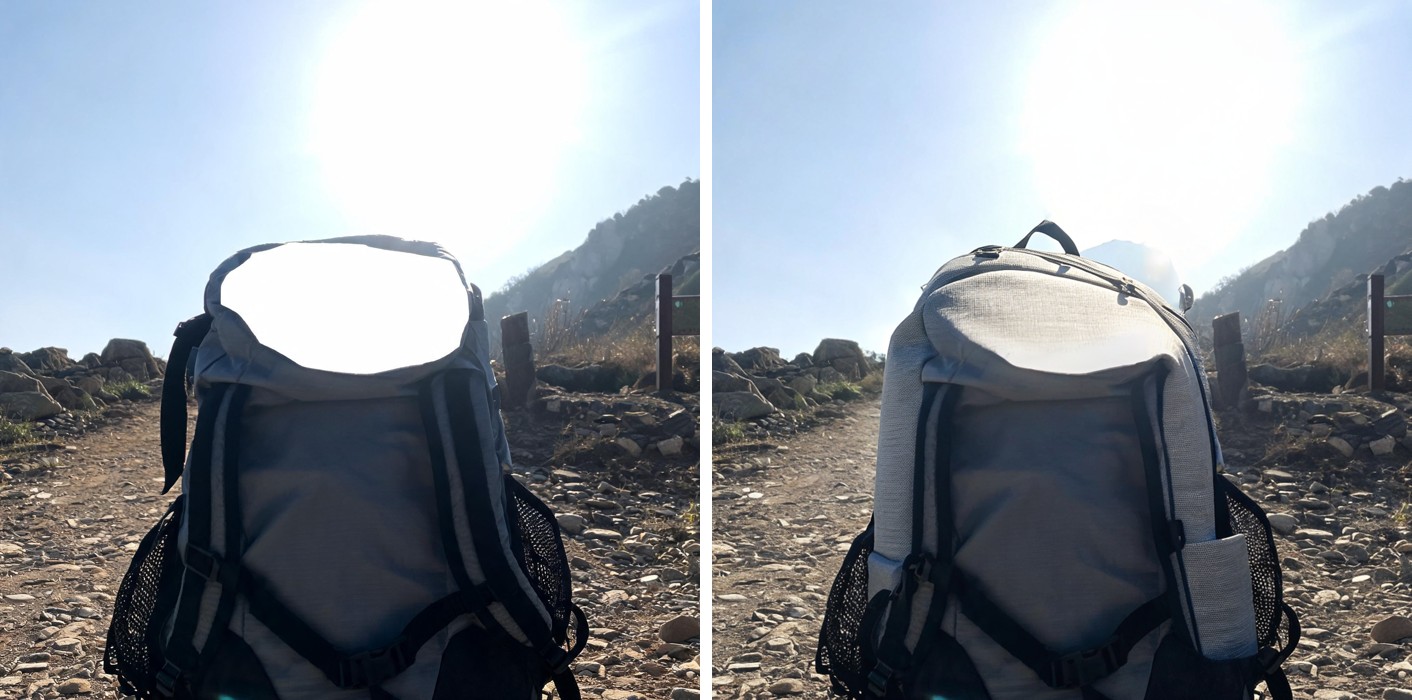
Once the source photo is clean, the fan-out step is generate_image_templates, Ad Studio's primary image-ad generator. One corrected outdoor gear photo becomes a square Facebook post, a 9:16 Story, and a horizontal Display banner in one pass, sized to what each placement actually expects, without re-shooting the same product in three different light conditions to get three different crops.

Building this into a seasonal gear-drop cadence
Outdoor brands run on seasons, not evergreen catalogs. Spring hiking gear, summer camping and paddlesport equipment, fall hunting gear, winter snow sports kit, each drop needs fresh product photography and most of it gets shot in the field, in whatever sun is available on the day of the shoot. The order matters every time: repair the photo first with enhance_asset_proxy (highlight recovery, shadow recovery, exposure balance), and only then hand the clean file to generate_image_templates for the ad-size fan-out. Doing it in the other order just resizes a photo that still has the blown-out highlight and the crushed shadow baked in, producing five flawed variants instead of one clean set.
This is the same creative-fatigue problem already covered in mobile game ad creative fatigue: a brand running one usable photo well past the point an audience has already seen it, because a proper reshoot in the right light is not always possible on a seasonal timeline. Outdoor gear brands hit that wall constantly, since most product shoots happen outdoors on a schedule set by the season, not the light. A repaired photo that can survive a proper exposure fix and a full ad-size fan-out gives an outdoor brand the rotation it needs without waiting for a golden-hour reshoot, the same fix already applied to a beverage brand's glare and condensation problem and a jewelry brand's specular-hotspot problem.
FAQ
Does enhance_asset_proxy change what the gear actually looks like? No. The mask covers the exposure problem across the frame, not the product's design or color. A tent's actual color, a backpack's actual build, a stove's actual finish stays exactly as manufactured. What changes is the lighting range the camera sensor could not hold in one shot.
Will the fixed photo still look like it was shot outdoors, not in a studio? Yes. The repair targets the exposure problem direct sun created, not the outdoor setting itself. A corrected photo still reads as a real trailhead or campsite shot, just without the blown-white-and-crushed-black look a single harsh-light exposure produces.
Does this apply to camping, hiking, and general outdoor gear the same way? The flaw is the same across any gear category shot outdoors in direct sun: tents and rainflies, backpacks and packs, coolers and cookware, paddlesport and fishing equipment. The dynamic-range problem does not change by product type, only the fix's mask shape does if the flaw is localized instead of whole-frame.
Do I need a different photo for every ad platform, or does one corrected shot cover all sizes? One corrected shot covers all sizes. generate_image_templates handles the resizing and cropping into each platform's spec from that single clean source, which is the entire point of fixing the photo once instead of five times.
The Coinis angle
An outdoor brand does not need a golden-hour reshoot for a product that already got photographed at noon on a trail. Repair the harsh-sunlight photo already on hand with Ad Studio's enhance_asset_proxy, then turn it into a full ad-ready set with generate_image_templates, and land the whole thing as a launch-ready ad through Ad Studio's templates instead of exporting raw images and building the ad by hand.
Sources
- Outdoor Industry Association, "2025 Outdoor Retail Sales Trends Report" (built with Circana), 2025. https://oia.outdoorindustry.org/exec-summary-outdoor-retail-sales-trends-2025
- National Retail Federation, "2025 Retail Returns Landscape," 2025. https://nrf.com/research/2025-retail-returns-landscape
- Rangefinder, "Harsh Light Photography: How to Work It and Love It," 2022. https://rangefinderonline.com/gear/lighting/harsh-light-photography-how-to-work-it-and-love-it/

Isidora Matovic
Author
Social media enthusiast and a full time researcher. She takes digital presence very seriously and that is why you are always in touch in what is going on with us! Follow us for more posts like this.