
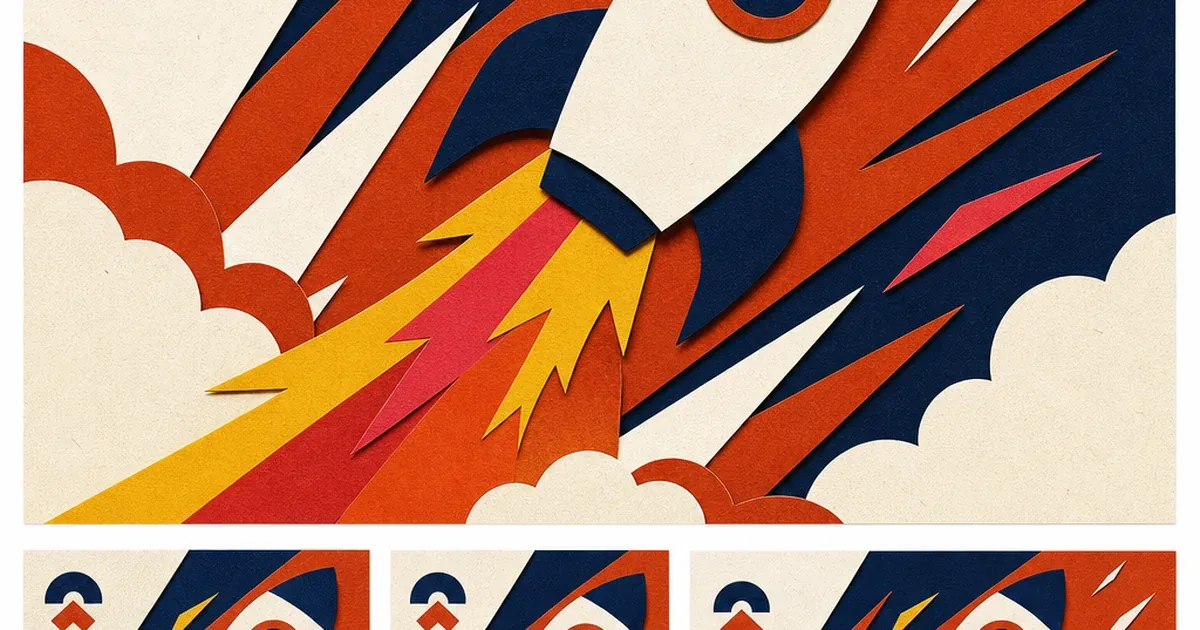
A franchise sends out one polished hero creative for its franchise ads. Head office approved the colors, the logo placement, the offer copy, everything. Then it goes out to 60 locations and two things happen at once. The ad that ran great in the flagship market falls flat everywhere else because it never mentions the city, the local offer, or anything that makes a scroller in Tucson feel like this ad is actually for them. And a few franchisees, frustrated with a one-size-fits-all creative that doesn't convert locally, go rogue: they crop the logo wrong, swap in an unapproved color, write their own promo copy. Now the brand looks like six different brands depending on which location's feed you're scrolling.
This is not a hypothetical. It is a structural inevitability of scale: a single flagship location can run on word of mouth and a shared drive, but every additional location adds another person making judgment calls about which logo file is current, which claim is approved this quarter, and which color is close enough to on-brand. Flip the failure mode around and the cost shows up on the customer side too. When locations market inconsistently, with different colors, different tone, different offers, customers notice, and the brand erodes one inconsistent feed post at a time.
Why this is a production problem, not a willpower problem
The scale here is real. According to the International Franchise Association's 2026 Franchising Economic Outlook, produced with FRANdata, the U.S. will have roughly 845,000 franchise establishments this year generating more than $920 billion in economic output. FRANdata's own franchisee-concentration research found that as of 2025, 19.3% of franchisees operate multiple units, and that group alone controls 58.8% of all franchised locations. A single multi-unit operator running a dozen locations across three states faces the exact same local-relevance-versus-brand-drift tension as a franchisor managing hundreds of independent franchisees, just compressed into one person's ad account.
The FTC requires every Franchise Disclosure Document to spell out exactly how this gets funded and governed. Item 11 of the FDD, per the FTC's own guidance and the underlying rule at 16 CFR Part 436, must disclose whether a franchisee has to contribute to a local or regional advertising cooperative or any other ad fund, how much, and who administers it. That paperwork exists because local advertising at franchise scale was already a known friction point before AI tools entered the picture: somebody has to pay for local creative, somebody has to approve it, and most systems don't have the production bandwidth to do a genuine local version of every national campaign at every location.
Meta's own Ads Manager has a feature built around this exact problem. Its store-location tools let a business with multiple physical locations customize ad creative with local details and target by store location or geographic area, because Meta's own product team recognized that a single national ad underperforms a localized one at this scale. The feature exists. Most franchise systems still don't have a fast, brand-safe way to fill it with genuinely local creative for every market, every format, every week, the same production gap that shows up when a Shopify catalog photo won't survive a resize across every placement a campaign needs.
The AI fix for franchise ads: one approved creative, infinite safe variations
This is exactly the gap two of Coinis' already-demonstrated Ad Studio tools close, used together rather than as a single trick for franchise ads at scale.
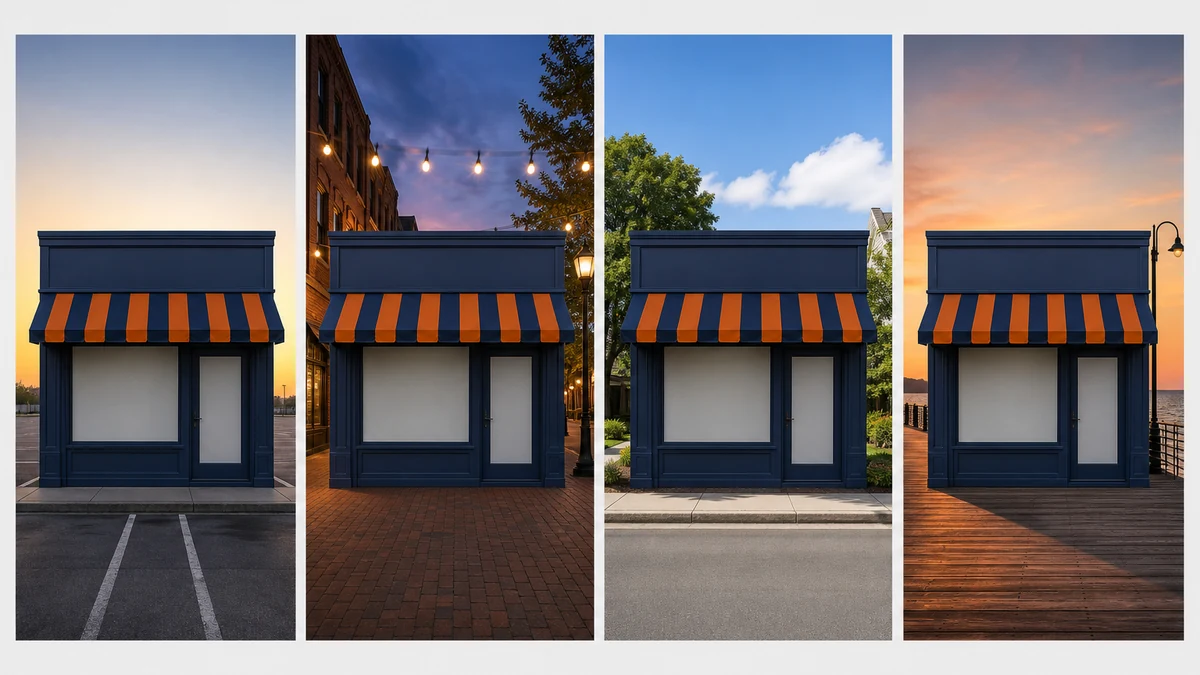
Step one: lock the approved master, then fan it into every ad size. generate_image_templates takes one product photo, the hero creative head office actually approved, and builds a genuine multi-format version for every placement a local campaign needs: square for feed, vertical for Stories and Reels, landscape for display. No franchisee has to crop anything by hand or guess at safe margins, which is exactly the kind of manual step that introduces off-brand drift in the first place.
Step two: anchor every local version to that same approved creative. revise_creative_variate takes the already-approved image and a plain-language instruction for the one or two things that should change for a specific market: swap in a local landmark backdrop, update the promo copy to a store-specific offer, shift the season or weather cue to match the region. Everything else, the product, the composition, the logo placement, the brand's color treatment, stays locked to the source. A franchisee in Austin and a franchisee in Portland can both run a locally-relevant ad without either one touching Photoshop or inventing their own creative from scratch.
Source: the approved national hero creative (storefront photo, brand palette, logo locked top-left).
Change: swap the plain parking-lot backdrop for a recognizable local streetscape cue and update the promo line to this location's current offer, keep the storefront, logo position, and color treatment identical to the source.
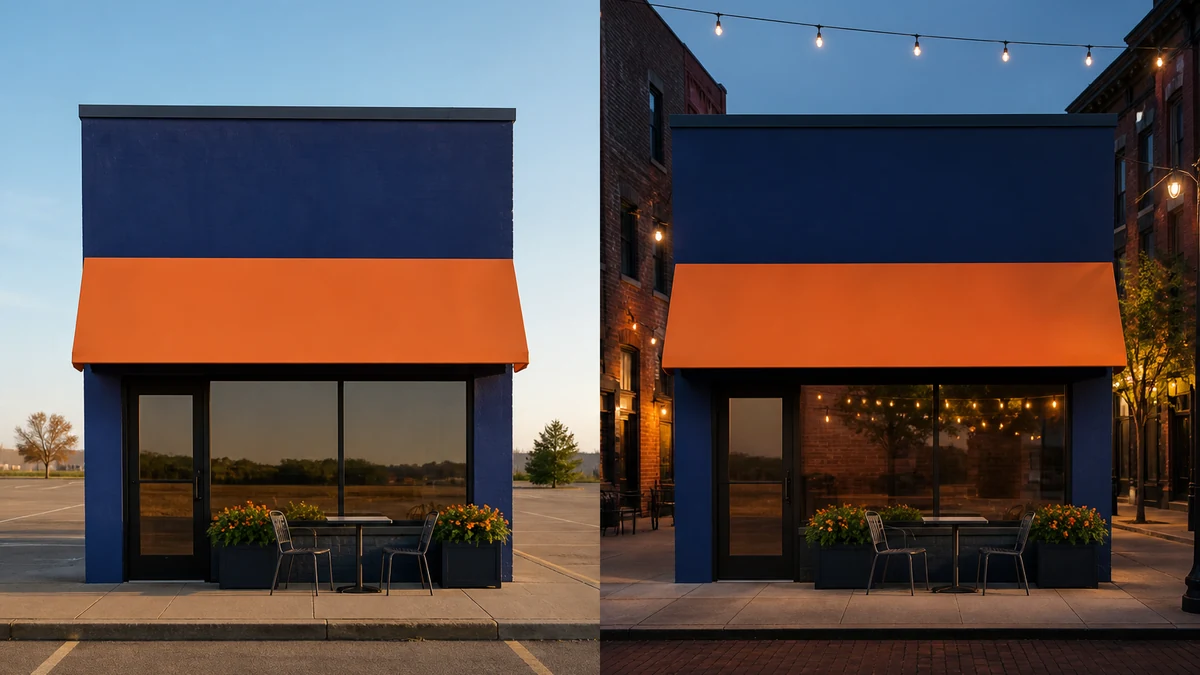
Run that same brief against three more markets, a different backdrop and offer line each time, and a franchisor or multi-unit operator has a real local campaign for every location without a single off-brand improvisation and without commissioning a new shoot per market.
What this actually solves
It is worth being precise about what this does and doesn't fix. It does not replace the governance a franchise system needs, the FDD-mandated disclosure of who funds local advertising, the actual local offers and compliance review a franchisor should still run. What it removes is the production bottleneck that pushes franchisees toward going rogue in the first place: if the fast, easy path to a local ad is also the on-brand path, fewer locations will feel like they have to break brand guidelines just to get a creative that speaks to their own market.
That is the same logic the brand-compliance problem points to from the other side: detection and drift-prevention work best when local teams start from approved material in the first place, so the fast path and the on-brand path are the same path. The only difference here is the mechanism. Instead of a locked design template a local marketer fills in by hand, an AI tool fans out and varies the approved creative directly, with the brand-safe constraints baked into what it will and won't change.
FAQ
Does this replace a franchise system's ad fund or approval process? No. The FTC's Franchise Disclosure Document requirements around advertising funds, including who contributes, how much, and who administers the spend, are a legal and financial governance question that an AI generation tool has no bearing on. This fixes the production step: once a local budget and an approved master creative exist, it is how you turn that one approved asset into every format and every local variant fast, without introducing off-brand risk.
How many local variants can one source creative realistically support? There's no hard cap built into the workflow. Each revise_creative_variate call takes the same source image and a new change instruction, so a franchisor or multi-unit operator can generate a fresh local version for as many markets as they have offers or backdrops to localize, the same anchored-variation approach used for unique per-SKU product photos, the limit in practice is how many distinct local briefs someone writes, not a platform ceiling.
What stops a franchisee from generating something off-brand with this tool? The variation tool is anchored to the source image specifically so that only what the prompt names actually changes, the product, composition, logo placement, and color treatment carry over from the approved master by default. That is the structural difference from handing a franchisee a blank canvas and brand guidelines PDF: there's no blank canvas to go rogue on.
Does this work for video ads too, not just static images? This specific pairing (generate_image_templates plus revise_creative_variate) is image-based. For a video local-relevance use case, the same brand-anchoring principle applies to Coinis' UGC and cinematic video presets, which take a locked product/brand brief and vary the execution rather than starting from a blank prompt each time.
Where does the local offer or city detail actually come from? From whoever is writing the per-market change instruction, typically the franchisor's local marketing coordinator or the multi-unit operator themselves. The tool doesn't invent local offers or claims. It executes the instruction against the approved creative, which keeps the actual claim language under the same review a franchisor would apply to any other local ad copy.
Build your next local campaign without the brand-drift risk
If your franchise system or multi-unit portfolio is still choosing between one generic national ad and letting every location improvise its own creative, there's a third option for your franchise ads. Take the approved hero creative to Coinis Ad Studio, fan it into every format the local campaign needs, then generate a safely-anchored local variant for each market, same brand, same product, just the local detail that makes it actually land.
Sources
- International Franchise Association, "2026 Franchising Economic Outlook" (with FRANdata): https://www.franchise.org/franchising-economic-outlook/
- FRANdata, "U.S. Franchising's Economic Outlook in 2026: Jobs, Output, and Growth" (multi-unit concentration stats, 19.3% of franchisees control 58.8% of locations): https://frandata.com/u-s-franchisings-economic-outlook-in-2026-jobs-output-and-growth/
- Federal Trade Commission, "Franchise Fundamentals: Taking a deep dive into the Franchise Disclosure Document" (Item 11 advertising-fund disclosure): https://www.ftc.gov/business-guidance/blog/2023/05/franchise-fundamentals-taking-deep-dive-franchise-disclosure-document
- eCFR, 16 CFR Part 436 (Franchise Rule disclosure requirements, Item 11 text): https://www.ecfr.gov/current/title-16/chapter-I/subchapter-D/part-436
- Meta Business Help Center, "About Store Location Features in Meta Ads Manager": https://www.facebook.com/business/help/1258060738066867

Isidora Matovic
Author
Social media enthusiast and a full time researcher. She takes digital presence very seriously and that is why you are always in touch in what is going on with us! Follow us for more posts like this.