
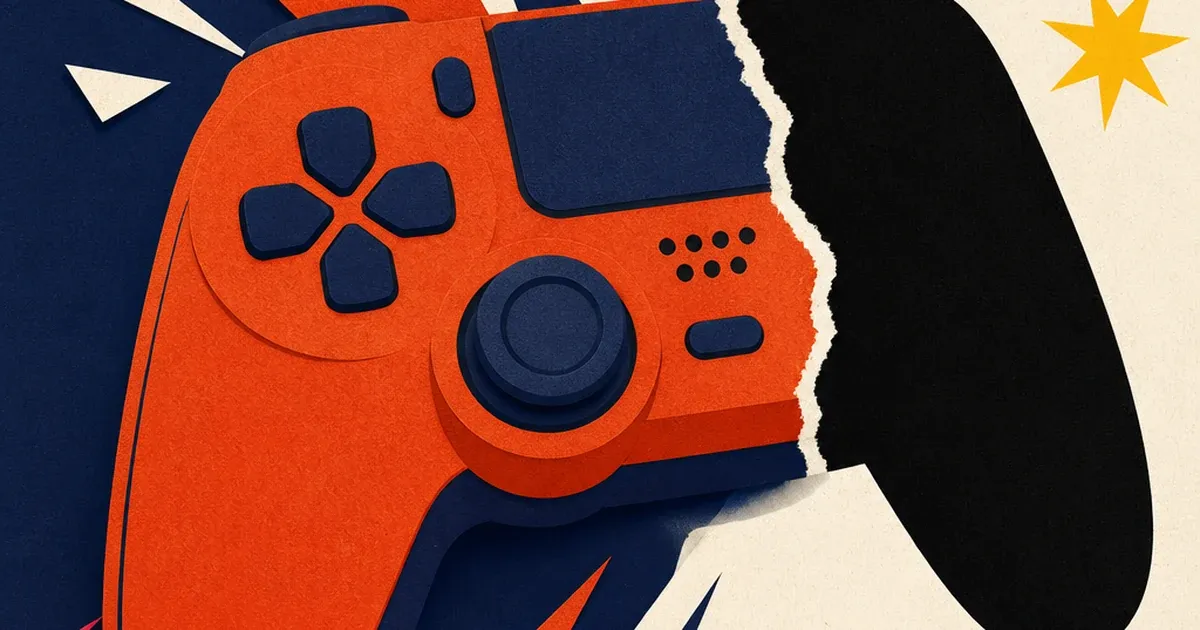
Every other preset in this mini-series shows the product. The social-proof preset shows it next to a review. The packshot preset shows it alone on white. The comparison-table preset shows it winning a checklist. The teaser preset does the opposite: it shows almost nothing, on purpose, and that's exactly why it works.
A 2020 study in the Journal of Marketing found that consumers prefer products when roughly a third of the image is concealed, not revealed. Julio Sevilla and Robert Meyer tested this on sneakers, concept cars, and even human faces, and the pattern held every time: full visibility didn't win, partial concealment did. Ad Studio's generate_image_preset_agent ships a teaser preset that builds exactly that effect into one generated image, the product almost hidden in darkness, with a single line of copy doing the rest of the work.
The research behind hiding your own product
Sevilla and Meyer's finding runs against the instinct every product marketer has. More information should mean a better decision. Show every angle, every detail, every spec, and let the shopper judge for themselves. Their data says otherwise, at least for the moment before someone commits to a purchase.
Across a series of studies, including shoes, cars, and computer-generated faces shown to participants of the opposite sex, the researchers found the same sweet spot: people rated items most favorably when about two-thirds of the visual information was shown and roughly a third was concealed. Participants shown photos of shoes and cars from every angle rated the products lower than participants shown fewer angles of the same items. In the face study, images with the middle third concealed, covering part of the eyes and nose, were rated as the most attractive by both male and female viewers.
The mechanism is curiosity, not deception. Concealing part of an already-appealing image creates what Sevilla and Meyer call an information gap, and closing that gap carries its own positive charge. Critically, the effect is specific to items with real visual appeal. It doesn't rescue an unattractive product. A teaser only works on something worth being curious about.
The American Marketing Association's own summary of the study names the direct application: "The effect is relevant to online retailing contexts and also to advertising teasers, marketing tactics that promote new products by concealing part of their visual features." Sevilla and Meyer went further than a lab test to confirm it, replicating the effect in a live Facebook teaser ad experiment, not just a controlled study.
What the teaser preset actually does
The preset renders one static image: the product mostly obscured by darkness, shadow, or negative space, with one short line of copy as the only clear signal of what's coming. Not a full product reveal. Not a spec list. One glimpse, one line, and a reason to wait for the rest.

This preset sits at the opposite end of the mini-series from the packshot preset, which strips a photo down to pure white and full visibility for a marketplace listing. Packshot exists because some ad placements require total clarity. Teaser exists because a launch moment benefits from the opposite: just enough to be curious, not enough to be satisfied. The comparison-table preset and the statistics-data preset both argue with information. Teaser argues with the absence of it.
Where this fits versus a trailer
Coinis's Ad Studio already has a format for building anticipation: the AI trailer generator can turn a product launch into a 30 to 45-second cinematic trailer with a genre, a story beat, and a title card. The teaser preset is not a smaller version of that. It's a different medium for a related job.
A video trailer tells a short story with a beginning, middle, and payoff beat. A teaser image shows one frozen moment of concealment, static, shareable as a single post, and far cheaper to produce and iterate on than a video render. Use a teaser image for the early countdown, the single social post two or three weeks out, the one asset that needs to exist within minutes of deciding to tease a launch at all. Save the video trailer for the moment the anticipation campaign is worth a bigger production.
The one-third rule, translated into a brief
Sevilla and Meyer's finding is specific enough to brief directly. Concealing roughly a third of the product, not all of it and not none of it, is what produced the strongest preference in their studies. A teaser that shows nothing at all isn't concealment, it's just an empty frame with no product to be curious about. A teaser that shows almost everything isn't a teaser, it's a product shot with low lighting.
Worked example: a launch moment, not a void
Start with a real product photo, the kind that already has genuine visual appeal, Sevilla and Meyer's effect specifically did not hold for unattractive items. The brief for the preset:
Preset: teaser
Product: [product photo URL or productId]
Concealment: show roughly two-thirds of the product silhouette, the rest fading into shadow or darkness, not a fully blacked-out frame
Teaser line: [one short, true line, e.g. "Something new is coming. December 1."]
Mood: dark, anticipatory, a hint of the product's real shape and color still visible
Avoid: full product reveal, more than one line of copy, any date or claim not supplied in the brief, garbled or illegible text

This is a real generate_image_preset_agent render, preset teaser, fired against a demo product photo with the exact prompt above. The output should hold back enough of the product to read as deliberate concealment rather than a lighting mistake, legible teaser-line text, and zero invented claim beyond the one line supplied.
FAQ
How much of the product should actually be hidden? Roughly a third, based on Sevilla and Meyer's findings across sneakers, cars, and faces. Hiding the whole product removes the thing people are meant to be curious about. Hiding almost nothing isn't concealment at all.
Does this work for every product? No. The effect is specific to items with genuine visual appeal. An unattractive or purely utilitarian product doesn't get a curiosity boost from being obscured, there's nothing appealing underneath the shadow for a shopper to want to see more of.
What should the teaser line actually say? One true, short line. A date, a category hint, a single word of anticipation. The preset renders exactly what the brief gives it, so an invented countdown date or a claim about the product that isn't locked in yet will render as confidently as a true one.
Is this the same as the AI movie-trailer tool? No. That tool (generate_cinematic_video's trailer format) builds a short video with a genre and story beats. This preset builds one static image built entirely around visual concealment. Different medium, same underlying goal of anticipation before a reveal.
When in a launch should a teaser image run? Early, before the bigger assets are ready. A teaser's whole value is low production cost paired with a real curiosity effect, so it fits the first post of a launch sequence, not the closing one.
Try it on Coinis
Pull a real photo of something genuinely worth being curious about, cover about a third of it in shadow, and let one honest line carry the rest. Ad Studio's teaser preset builds it in one generation, ready for the first post of a launch sequence.
Start building launch creative on Coinis
Sources
- Sevilla, Julio, and Robert J. Meyer, "Leaving Something for the Imagination: The Effect of Visual Concealment on Preferences," Journal of Marketing, February 2020: https://journals.sagepub.com/doi/10.1177/0022242919899393
- American Marketing Association, "How to Increase Customer Preference with Partially Concealed eCommerce Products," March 11, 2020: https://www.ama.org/2020/03/11/how-to-increase-customer-preference-with-partially-concealed-ecommerce-products/
- Terry College of Business, University of Georgia, "Leave Something to the Imagination," faculty research summary: https://www.terry.uga.edu/leave-something-imagination/

Isidora Matovic
Author
Social media enthusiast and a full time researcher. She takes digital presence very seriously and that is why you are always in touch in what is going on with us! Follow us for more posts like this.