
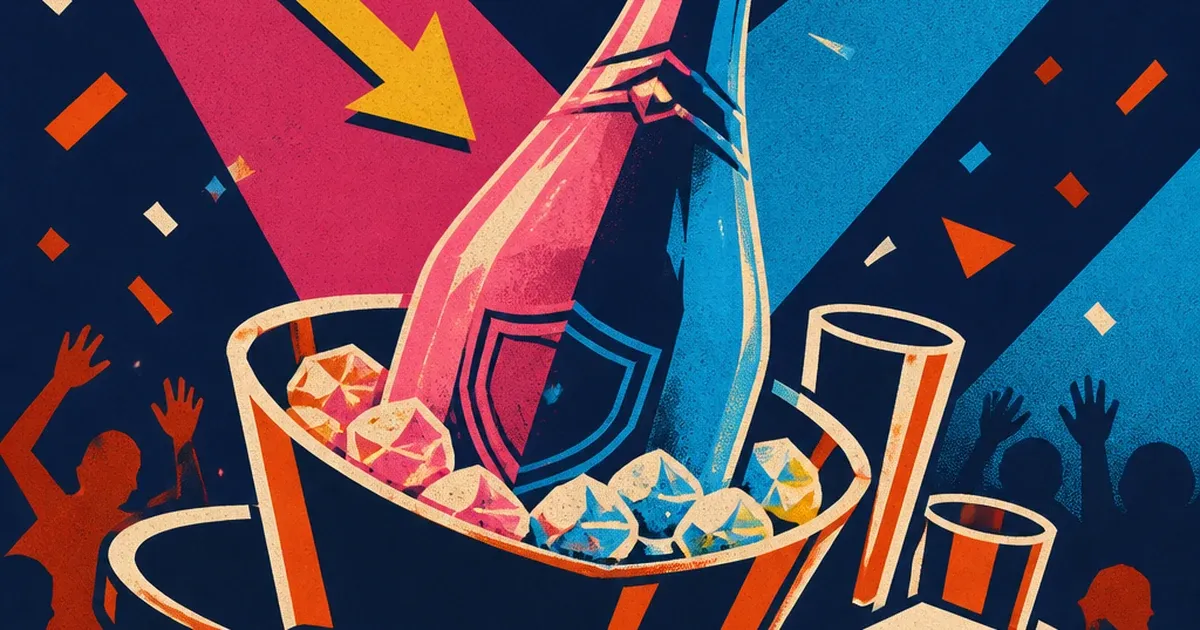
A venue's marketing photo comes straight off the floor on a live night. Bottle service tray, a merch table, a menu card propped against the bar rail, all lit by whatever the DJ booth is running that night: magenta wash from one side, cyan from the other, a strobe kicking in on top. The tray looks great to the eye in the room. On camera, the label on that bottle reads half-purple, half-green, and no amount of cropping fixes it because the color is wrong at the source, not the framing.
Why this is not the same problem as bad white balance
Every other lighting-defect problem in this series comes down to a camera algorithm making a bad guess: auto white balance overcorrecting, a fluorescent tube skewing warm-cool, ISO noise from underexposure. Nightlife venues have a different problem, and it is not a guess gone wrong. The light itself is colored. A stage rig running RGB LED washes or physical color gels is putting real red, green, or blue light onto the product, and a camera sensor records that light accurately. The camera did its job. The light was never neutral in the first place.
That distinction matters for the fix. A white-balance slider assumes the true color of the light source is somewhere near daylight or tungsten and just needs nudging back to center. Colored stage lighting has no such center to nudge toward. A single frame can carry three or four different hues landing on the same surface at once, which is exactly what a photographer with hands-on experience in mixed colored-light environments describes: gel everything to control it fully, gel one dominant source as a partial fix, or accept that the rest of the frame will carry a cast and correct selectively after the fact (community photography discussion, "How to white-balance photos shot in mixed-lighting environments," photo.stackexchange.com). A venue posting a phone photo from an actual event has none of those controls available in the moment. The gels are already set for the room, not the camera.
The industry this defect is quietly taxing
Bars and nightclubs are not a niche corner of local advertising spend. The US bars and nightclubs industry generated 38.6 billion dollars in revenue in 2026, growing at a 2.8 percent compound annual rate over the five years to 2026, across nearly 70,000 businesses nationwide (IBISWorld, "Bars & Nightclubs in the US Industry Data and Analysis," 2026). Every one of those venues runs on the same marketing loop: photograph the room and the offer, post it, sell tickets or drive a walk-in crowd for the next event, a loop Coinis's own nightlife industry page is built to support. A bottle-service tray or a merch table with a visibly wrong-colored product is not a stylistic quirk in that loop. It reads as a bad phone photo next to every competing venue's cleaner post in the same feed.
What generic advice gets wrong for this specific case
The usual fix for a color problem is "shoot in better light" or "turn off mixed sources." Neither applies here. A venue cannot turn off its own stage lighting to take a marketing photo, that lighting is the whole point of the room's atmosphere, and the same photo that needs to sell the vibe of a night out also needs the product on the table to read in its real color. Waiting for house lights or a daytime reshoot solves the color problem by removing the thing the ad is supposed to sell.
The correction that actually works here is a targeted, localized color-neutralization pass on just the product surface, not a whole-frame white-balance shift. Shifting the entire photo toward neutral would flatten out the colored ambiance the venue wants to keep in the background, the exact opposite of what a nightlife ad needs. The fix has to isolate the one object the ad depends on, correct its true color, and leave every other pixel of stage lighting exactly as shot.
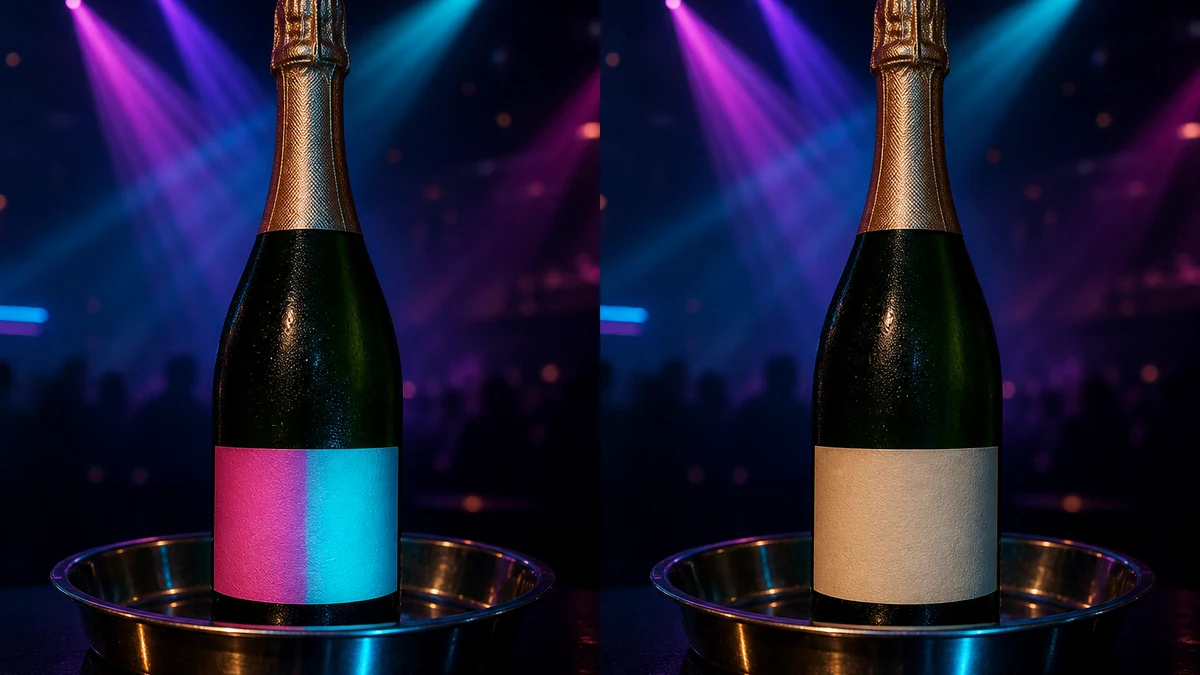
Illustrative example. mcp.coinis.dev was unreachable this session (ongoing outage since 2026-08-21), so this before/after was generated as a direct illustrative rendering rather than through Coinis's own enhance_asset_proxy tool. For a real enhance_asset_proxy correction on a product photo, see the jewelry ad photo fix article.
On Coinis, that repair runs through Ad Studio's enhance_asset_proxy tool, the same photo-repair engine that neutralizes a gym's mirror-wall reflection or a hotel room's mixed-lighting color cast, applied here with a mask scoped to just the product instead of the whole frame. The room stays exactly as lit. Only the product reads true.
From one corrected photo to a full event campaign
A single fixed photo still has to fill every slot a venue's promotion needs: a square crop for a feed post, a vertical crop for a Story counting down to doors, a wide landscape crop for a Google Display banner running the week before the event.
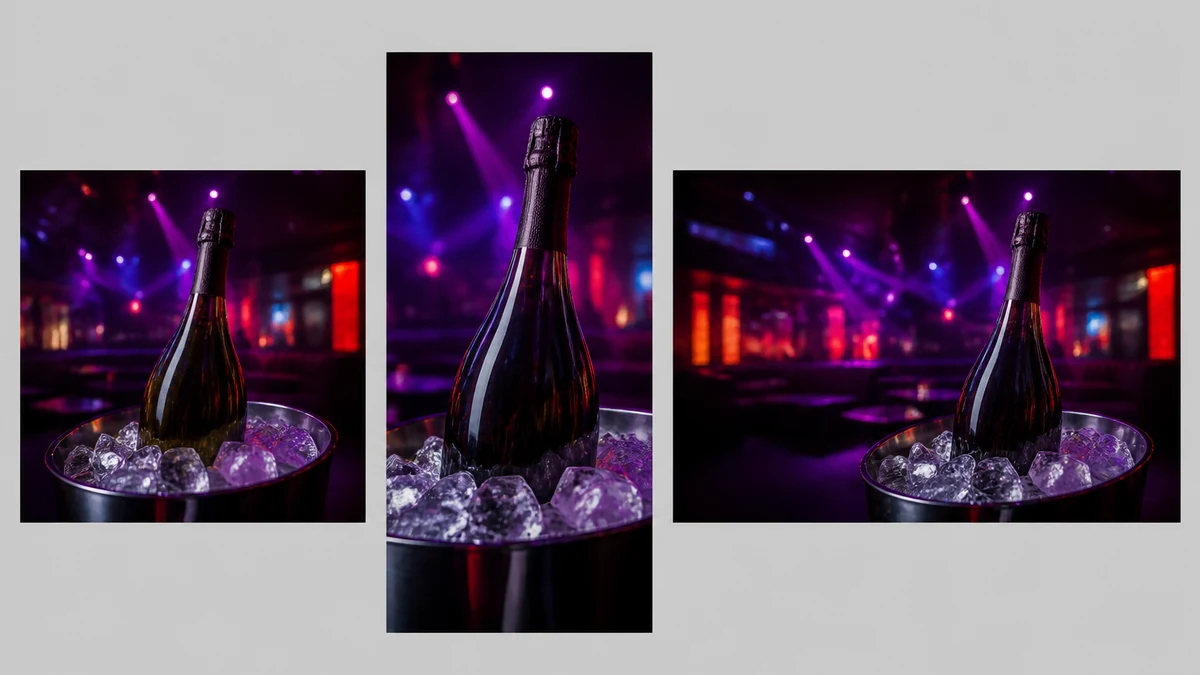
Illustrative example. mcp.coinis.dev was unreachable this session, so this multi-format fan-out was generated as a direct illustrative rendering rather than through Coinis's own generate_image_templates tool. For a real generate_image_templates fan-out, see the one photo every ad size article.
Coinis's generate_image_templates tool takes that one corrected photo and produces the matched set across every standard ad size inside the same Ad Studio workflow, instead of a promoter manually cropping three separate files and hoping the color reads the same in each one.
What to do with a venue's own event photo before it becomes an ad
- Treat any photo with a visibly colored product surface as a localized fix, not a global white-balance correction. Nudging the whole photo toward neutral kills the ambiance the ad is supposed to sell.
- Mask the correction to the product itself, whether that is a bottle, a glass, or a piece of merch. Everything else in the frame, including the colored stage wash, should stay as shot.
- Generate every ad size from the corrected photo, not the raw event shot, so the color problem does not resurface in whichever crop skipped the repair step.
- Keep every generated image scoped to product and venue only. No consumption imagery, no targeting language tied to age or drinking behavior.
FAQ
Why does colored stage lighting cause a bigger problem than normal indoor lighting? Normal indoor lighting is usually one dominant color temperature a white-balance slider can correct toward. Colored stage lighting can put several different real hues onto the same surface at once, and there is no single neutral point to correct toward, only a specific product surface that needs its true color restored.
Can a venue just avoid this by turning off the colored lights for the photo? Not without losing what the ad is trying to sell. The colored lighting is part of the venue's atmosphere and the reason someone books a night out there. The fix keeps that lighting and corrects only the product.
Is this the same fix as a whole-photo color cast on a beauty or hotel photo? No. Those corrections touch the entire frame because the whole photo shares one bad light source. This fix is localized, a tight mask on the affected product only, because the rest of the frame's colored lighting is intentional and should stay.
What ad sizes does a venue actually need from one event photo? At minimum a square crop for feed posts, a vertical crop for Stories promoting an upcoming date, and a landscape crop for Display placements. Generating all three from the same corrected photo keeps the product's true color consistent across every placement.
Does this fix change anything about the room or the mood of the shot? No. A correctly scoped fix only touches the masked product region. The colored stage lighting, the crowd, the room itself stay exactly as shot.
Turn tonight's event photo into next week's campaign
A venue does not need a lighting rig change or a daytime reshoot to get a product that reads true in a photo. It needs the product corrected once, with the room's own colored lighting left intact, then generated into every format the next event's promotion needs. On Coinis, that is enhance_asset_proxy for the localized correction and generate_image_templates for the fan-out, run as one Ad Studio workflow instead of a manual crop-and-guess pass. Start from the last event photo already sitting on a venue's phone and turn it into a ready-to-run ad set with Coinis Ad Studio.
Sources
- Community photography discussion, "How to white-balance photos shot in mixed-lighting environments," photo.stackexchange.com: https://photo.stackexchange.com/questions/8577/how-to-white-balance-photos-shot-in-mixed-lighting-environments
- IBISWorld, "Bars & Nightclubs in the US Industry Data and Analysis," 2026: https://www.ibisworld.com/united-states/industry/bars-nightclubs/1685/

Isidora Matovic
Author
Social media enthusiast and a full time researcher. She takes digital presence very seriously and that is why you are always in touch in what is going on with us! Follow us for more posts like this.