
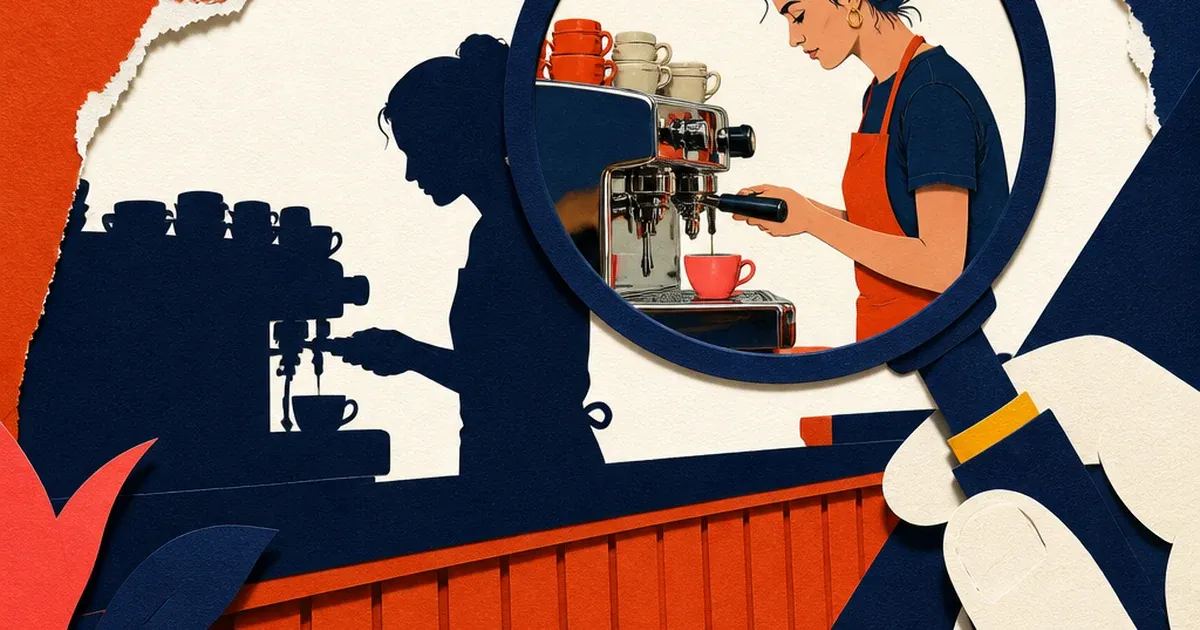
Walk into any coffee shop with a big front window and you'll see the same shot happening on someone's phone: pointed at the espresso bar, the barista pulling a shot, the pastry case glowing under the counter lights. It looks perfect on the tiny screen. Post it as an ad and the espresso machine is a black shape, the barista is a shadow, and the only thing in real focus is a blown-out rectangle of white where the window used to be.
That's not bad luck. It's basic exposure physics working exactly the way it's supposed to, just against you.
Why your best light is also your worst enemy
A coffee shop's window is usually the brightest, most photogenic spot in the building. Natural light, warm wood tones, steam curling off a cup. It's also, by a wide margin, the worst place to shoot a product photo if the window ends up behind your subject.
Cameras don't know what you care about in a frame. They average the light across the whole scene, or they meter off whatever's biggest and brightest, and a sunlit window absolutely dominates that average. Nikon's own photography guide lays out the mechanic plainly: backlit scenes "can often lead to underexposed subjects or overly bright backgrounds," and fixing it takes deliberate exposure compensation, precisely because the camera's automatic metering gets fooled by the bright light source sitting behind the subject (Nikon, 2024, nikon.co.uk). The camera exposes correctly for the window. Everything in front of that window, your espresso bar, your barista, your product, goes dark to compensate.
This is a different failure than a color problem. It's not that the light is the wrong hue, it's that there isn't enough of it hitting the front of your subject relative to what's blasting through the glass behind it. Spot metering and positive exposure compensation are the professional photographer's fix in the moment, dialing exposure up specifically for the darker foreground even though it means letting the window blow out to pure white. Most coffee shop owners shooting on a phone between customers don't have time to think about spot metering. They get the silhouette, and they post it anyway, because it's the photo they have.
What this actually costs a coffee shop's ad account
A silhouette shot doesn't just look unpolished, it fails at the one job a coffee shop ad photo has: making someone want that specific espresso, that specific pastry, that specific counter. If your product is a dark shape against a bright window, there's no latte art to admire, no pastry glaze to catch the eye, no detail at all. The scroll keeps moving.
Coffee and snack shops are a genuinely competitive, high-volume category to advertise in. The US Coffee & Snack Shops industry sits at $75.5 billion in 2026, spread across 94,331 businesses that grew at a 5.7% CAGR between 2021 and 2026 (IBISWorld, 2026). That's a lot of storefronts fighting for the same local scroll, and most of them are independent operators without a photo studio or a lighting kit, shooting on whatever phone is behind the counter. The businesses that show a genuinely appetizing, well-lit shot of the product win the click. The ones with a silhouetted espresso machine don't.
Fixing the exposure without reshooting anything
You don't need better light or a reshoot to fix this. You need the photo you already have corrected so the foreground reads clearly while the shop's actual character, the window, the warm tones, the atmosphere, stays intact behind it.
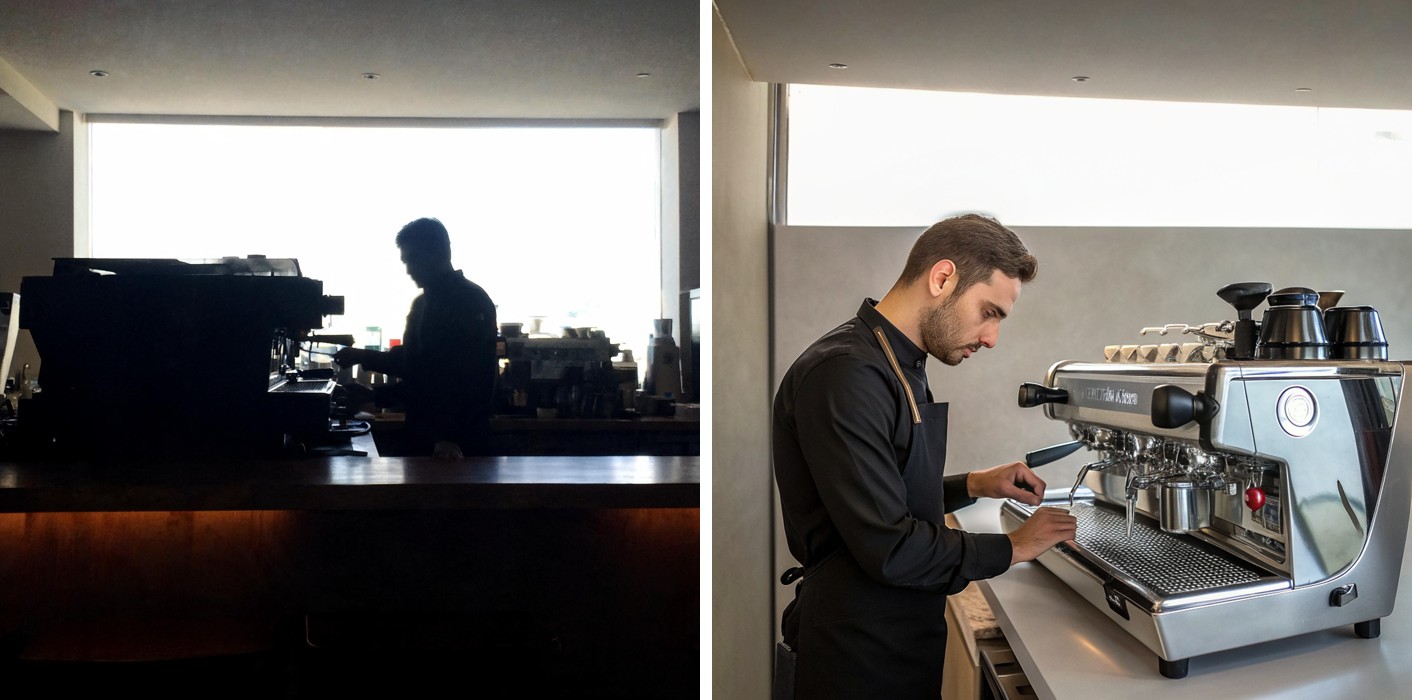
The correction targets only the underexposed foreground: the espresso machine's chrome, the barista's expression, the visible texture on a pastry, brought up to a normal exposure level, while the window is left exactly as bright and blown-out as it naturally would be in a real backlit shot. That's the honest fix. Nobody expects a coffee shop's window to look moody and dim in an ad, they expect to actually see the coffee.
One corrected photo, every ad size your channels need
Once the exposure is fixed, the same corrected shot needs to work as a Meta feed image, an Instagram Story, a Google Display banner, and whatever else your channel mix requires. Reshooting for every aspect ratio isn't realistic for a shop running lean. Fanning out one corrected source image is.
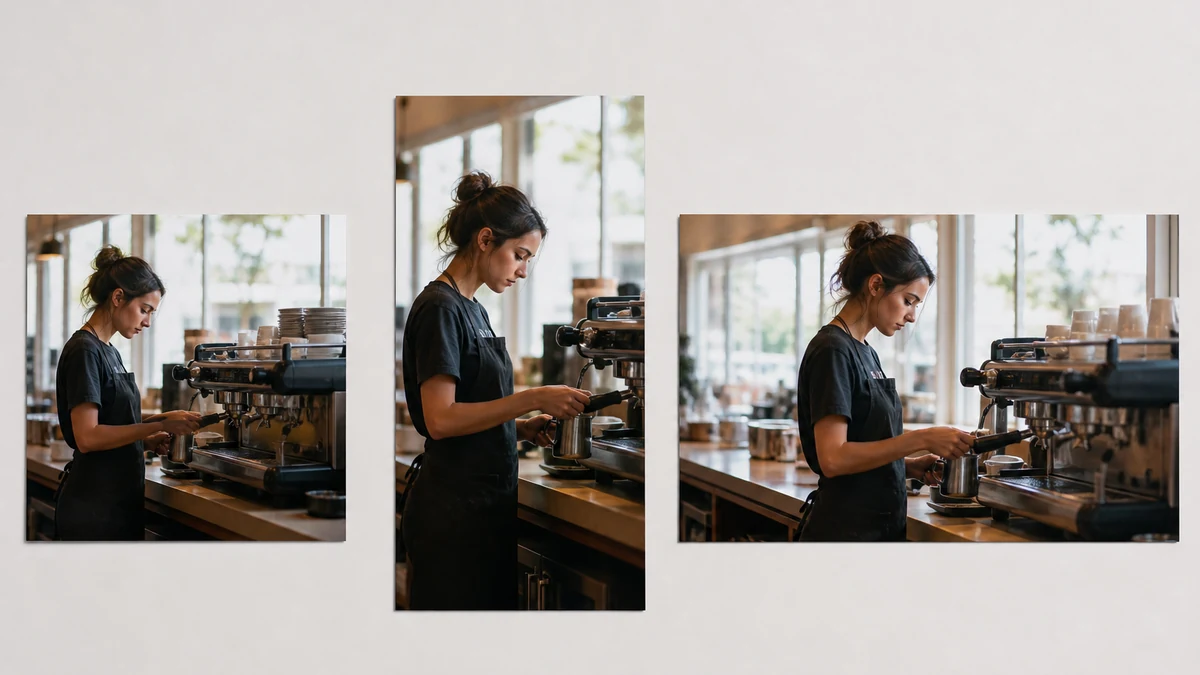
The real Ad Studio fan-out render generated for this image had to be discarded during QA (it leaked an unrelated software-product mockup instead of the coffee shop photo), so the image above is an illustrative mockup of the same three-format layout. For a verified real generate_image_templates fan-out render, see the one photo, every ad size article.
Same product, same lighting fix, three formats ready to run without touching a camera again, the same fan-out approach already demonstrated on one photo, every ad size.
What to do with this today
If you're running ads for a coffee shop, cafe, or roastery and your best product shots are the ones you took in front of your own window, pull them up and look honestly at the foreground. If the espresso bar, the barista, or the pastry case reads dark or flat compared to the window behind it, that's the exposure problem above, not a lighting-talent problem.
On Coinis, upload that photo into Ad Studio's photo enhancer, correct the exposure on the actual subject without losing the window's natural warmth, and generate every ad size you need for your current campaign from the one corrected image. No reshoot, no lighting kit, no waiting for a slow morning to try again with the blinds half-closed.
FAQ
Why does my coffee shop photo look fine on my phone but bad as an ad? Phone screens and camera apps apply live auto-adjustments that can partially compensate for backlighting in the viewfinder or on playback. Once that photo is exported and viewed as a static ad image, the raw underexposure in the foreground becomes obvious.
Should I just close the blinds and turn on more lights? That works for a reshoot, but it also kills the natural-light look that makes a coffee shop's storefront photo appealing in the first place. Correcting the exposure on an existing backlit photo keeps the window's warmth while fixing the foreground, without changing the shop's actual look.
Does this fix work on video too, or just still photos? The correction shown here is for a still photo, the type of shot most coffee shops actually have on hand from a phone. Video backlighting has the same underlying metering problem, but needs a different correction approach.
What's the fastest way to get all my ad sizes from one photo? Correct the exposure once on your best available shot, then run that single corrected image through a multi-format generator so you get square, vertical, and landscape versions without separate edits for each platform.
Is this only useful for coffee shops with big windows? No. Any storefront business that shoots its product near a bright window or doorway runs into the same metering problem: a restaurant's backlit dining room, a spa's dim reception area, or a skincare brand's studio-lit product shot all share the same underlying exposure problem. Coffee shops just hit it constantly because the window-side counter is usually the best-looking spot to shoot from. See Coinis for coffee shops for the full Ad Studio template set built for this category.
Sources
- Nikon, "How to make the most of this summer's golden hour with backlighting," nikon.co.uk, https://www.nikon.co.uk/en_GB/learn-and-explore/magazine/tips-and-tricks/make-the-most-of-golden-hour-with-backlighting
- IBISWorld, "Coffee & Snack Shops in the US Industry Analysis, 2026," https://www.ibisworld.com/united-states/industry/coffee-snack-shops/1973/

Isidora Matovic
Author
Social media enthusiast and a full time researcher. She takes digital presence very seriously and that is why you are always in touch in what is going on with us! Follow us for more posts like this.