
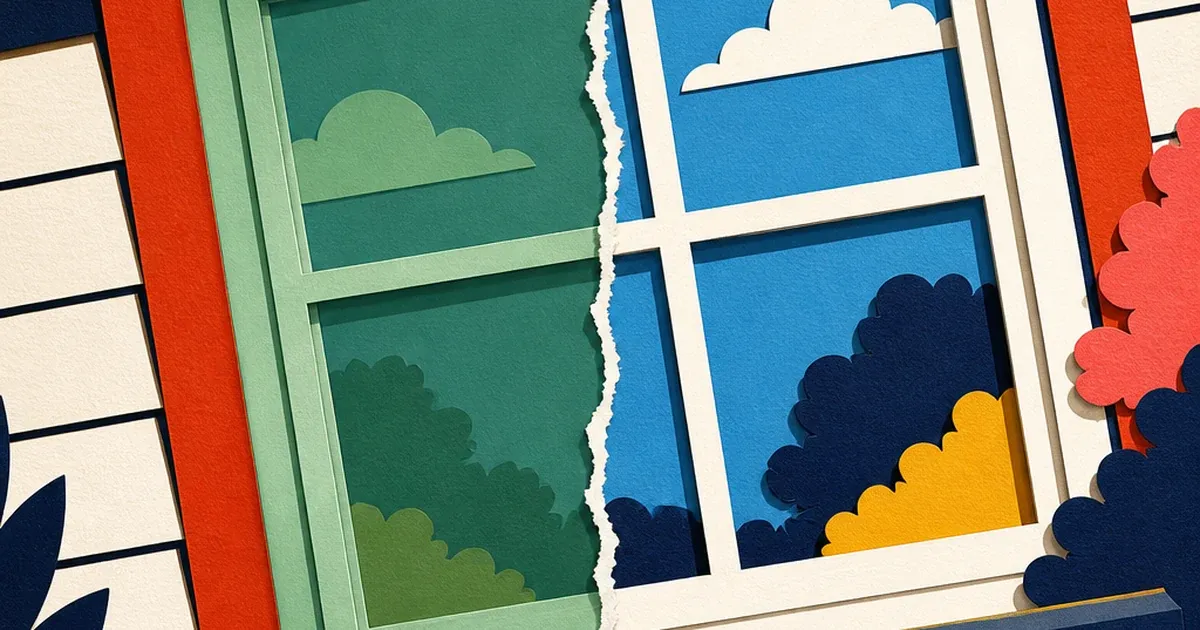
You shot the finished install. New frames, clean caulk lines, the glass looks spotless. Then you open the file and the whole window reads faintly green, like it was shot through a pair of old sunglasses. The frames are the right color. The siding next to them is the right color. Only the glass is off, and it is off in almost every photo of every job that uses the same window line.
That tint is not a camera setting and it is not dirty glass. It is coming from the coating that makes the window perform.
What's actually happening on the glass
Most windows installed in homes built after 2000 use Low-E (low-emissivity) glass: a microscopically thin metallic coating bonded to one glass surface inside a sealed dual-pane unit. The coating reflects infrared and ultraviolet light back out before it can carry heat through the window, which is exactly what makes a Low-E window more efficient than plain glass. Homeowner forums describe the visible side effect constantly: a faint green, blue, or amber tint that shows up more at an angle than head-on, and gets stronger with "high-performance" Low-E variants that use a heavier coating (Houzz forum thread, "Hate the Low-E Green Color Cast," 2026). A separate thread confirms the same pattern from a different angle (r/HomeImprovement, "What is the popular opinion on Low-E window glass?," 2026).
A glass-film supplier's own compatibility guide puts a number on how to spot it: hold a flame near Low-E dual-pane glass and one of the four reflections off the sealed unit will shift color, orange instead of pink or purple, which is the coating revealing itself. The guide also notes that "High-Performance" Low-E, now standard on south- and west-facing windows in hot climates, carries "a stronger blue or silver tint" than standard Low-E (Flexfilm, "Architectural Glass Compatibility Guide," 2026). None of this is a flaw. A window manufacturer's own FAQ confirms the coating is "virtually colorless" by design and gets mistaken for tinted glass constantly, even though tinting and Low-E are two different products with two different purposes (Paradigm Windows, "4 Misconceptions About Low-E Glass").
For a window installer, a glazing contractor, or a manufacturer running ads, the physics does not matter to a scrolling homeowner. A green-tinted window in a "finished job" photo reads as a bad install, streaky glass, or a cheap product, exactly the opposite of the clean, premium result the ad is supposed to sell.
The fix: correct the color, keep the window
The real fix is not reshooting every job at a different angle, which is not practical once the crew has moved to the next house, and it is not stripping the coating out of the photo's description, since the coating is also the thing that sells the window's energy-efficiency pitch. The fix is a targeted photo correction that neutralizes the tint on the glass panes without touching the frame color, the siding, or the rest of the shot.
Step 1: Mask only the glass panes. The Low-E tint sits on the glass surface and nowhere else. A mask drawn tightly around each pane, skipping the frame, trim, and hardware, keeps the correction from drifting into parts of the photo that are already accurate.
Step 2: Run a targeted repair through enhance_asset_proxy (recraft-inpaint). The prompt describes only the end state: clear, neutral glass with no visible color cast, consistent across every pane. No hue word describing the defect goes in the prompt. Naming the color you want removed, even in a "remove the green" framing, is a confirmed way to get a model to paint more of that color in instead of taking it out.
Step 3: Fan it out with generate_image_templates. Once the corrected photo exists, the same shot becomes every ad format a campaign needs from one source image: square for Meta feed, vertical for Stories and TikTok, landscape for Google Display and YouTube. One clean before/after shot becomes a full multi-channel launch kit instead of a single static image. The underlying correction method is the same approach Coinis uses on other coating- and finish-related color problems, including the thin-film interference rainbow on solar panel glass and paint swatches that shift color under different lighting.
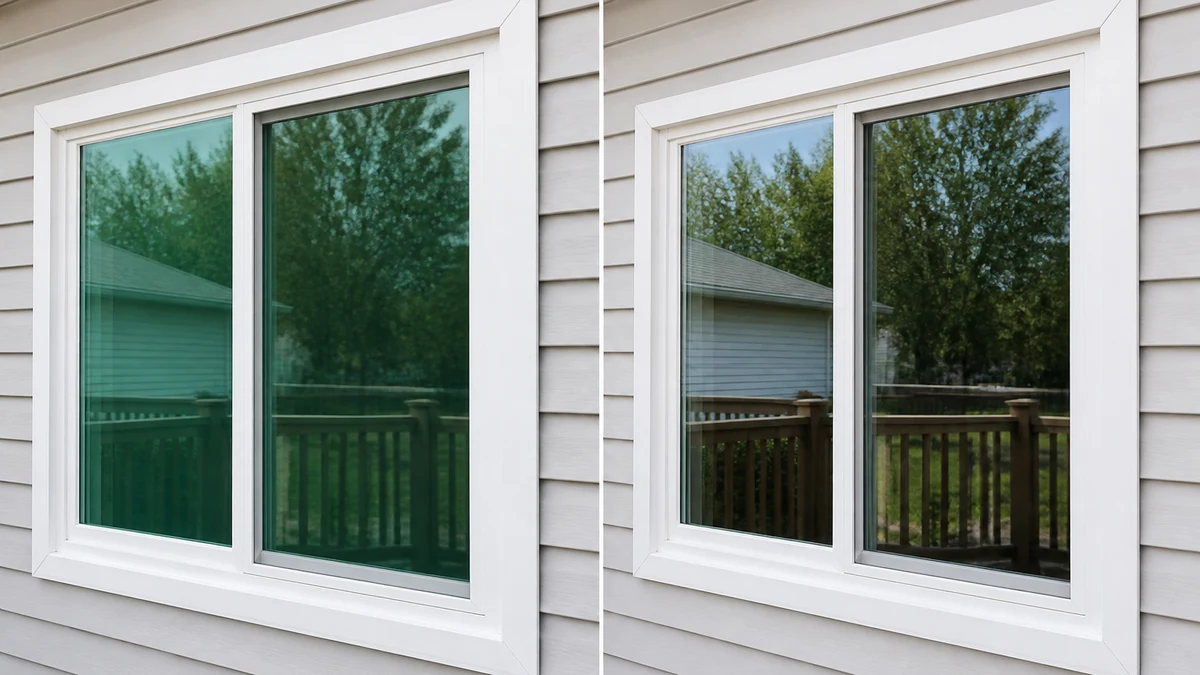
mcp.coinis.dev, the live render pipeline for enhance_asset_proxy, is in an extended OAuth outage at publish time. The image above is an illustrative composite generated separately to show the intended before/after result, not a live enhance_asset_proxy render. See the bakery display case fix for a real enhance_asset_proxy correction on a different coating/glare problem.
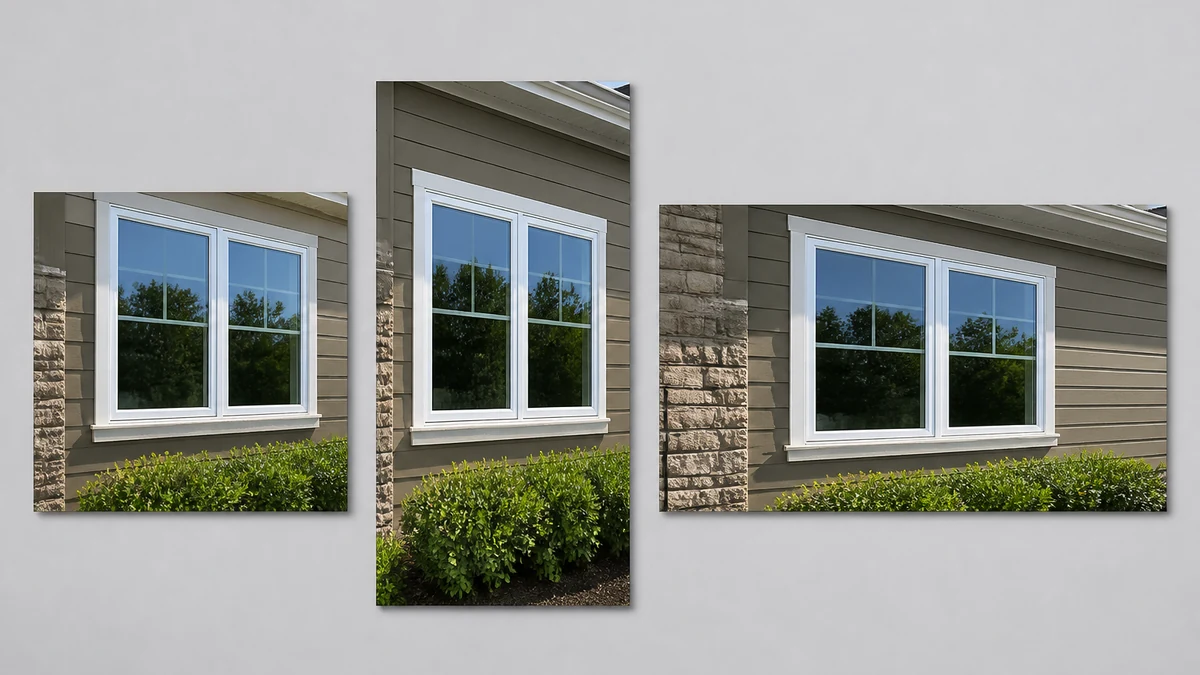
Same outage note applies here: this is an illustrative mockup of the intended generate_image_templates fan-out, not a live render. See one photo, every ad size for a real generate_image_templates fan-out.
Why this matters for window and glazing contractors specifically
Window replacement is a trust-and-referral business. A homeowner comparing three quotes is scanning the "after" photos on every contractor's ad for anything that signals a rushed or sloppy job, and a green cast across the glass reads as exactly that, even on a flawlessly installed window. The category is sizable enough that getting this right at scale matters: the window installation industry in the US is a $7.8 billion market in 2026, growing at a 2.4% CAGR between 2021 and 2026 (IBISWorld, "Window Installation in the US Industry Analysis, 2026"). That is a large, fragmented field of local and regional installers competing almost entirely on "look how clean this job turned out" creative, most without a dedicated photo-retouching step in their workflow.
The same correction applies whether the source photo comes from an installer's phone at job completion, a manufacturer's spec-sheet catalog shot, or a homeowner's own after photo submitted for a review-driven testimonial ad. Any of them can pick up the same coating tint under the wrong light, the same way a roofing drone photo can pick up internal lens flare shooting toward the sun or a construction job-site shot can pick up atmospheric dust haze that has nothing to do with the quality of the work underneath it.
What to do now
If you run ads for a window replacement company, a glazing contractor, or a window manufacturer, go back through your last batch of finished-install photography and look specifically at the glass, not the frames. The tint is easy to miss scrolling on a phone and obvious on a full-size ad creative next to a competitor's cleaner shot. Any photo carrying it is one correction pass away from being usable, and once it is fixed, that same photo turns into a full set of launch-ready ad formats in one pass through Coinis Ad Studio instead of a reshoot or a manual edit per channel. One clean photo in, a full ad kit out.
FAQ
Is the green tint on my window photo a sign of a bad installation? No. It is a normal visible side effect of the Low-E coating on the glass, which reflects infrared and UV light to improve energy efficiency. It is a property of the glass product itself, not a sign of poor workmanship.
Will every Low-E window photograph this way? Not identically. The strength of the visible tint depends on the specific Low-E coating used (standard versus High-Performance), the camera angle relative to the glass, and the lighting at the time of the shot. Straight-on shots in flat light show less of it than angled shots in direct sun.
Is this the same thing as tinted glass? No. Tinted glass has color built into the glass itself and blocks a meaningful amount of visible light. Low-E glass uses a thin, nearly colorless metallic coating designed to reflect heat, and any visible tint is a byproduct of that coating rather than an intentional color additive.
Does correcting this count as misrepresenting the installation? No. The correction removes a photographic color artifact caused by coating physics and camera angle, not any feature of the actual window. The glass, frame, and installation in the corrected photo are exactly what was installed.
What ad formats should I generate from the corrected photo? At minimum, a square crop for Meta and Instagram feed, a vertical 9:16 for Stories and Reels, and a landscape crop for Google Display and YouTube. Building all three from the same corrected source keeps the creative consistent across every channel a window-replacement campaign runs on.
Sources
- Houzz forum, "Hate the Low-E Green Color Cast... can we get rid of it??" https://www.houzz.com/discussions/6142299/hate-the-low-e-green-color-cast-can-we-get-rid-of-it
- Reddit r/HomeImprovement, "What is the popular opinion on Low-E window glass?" https://www.reddit.com/r/HomeImprovement/comments/udkhw8/what_is_the_popular_opinion_on_lowe_window_glass/
- Flexfilm, "Architectural Glass Compatibility Guide," Low-E identification and High-Performance tint strength. https://flexfilmstore.com/pages/glass-compatibility-guide
- Paradigm Windows, "4 Misconceptions About Low-E Glass," coating is colorless-by-design, distinct from tinted glass. https://paradigmwindows.com/4-misconceptions-about-low-e-glass/
- IBISWorld, "Window Installation in the US Industry Analysis, 2026," $7.8bn market size, 2.4% CAGR 2021-2026. https://www.ibisworld.com/united-states/industry/window-installation/4869/

Isidora Matovic
Author
Social media enthusiast and a full time researcher. She takes digital presence very seriously and that is why you are always in touch in what is going on with us! Follow us for more posts like this.